
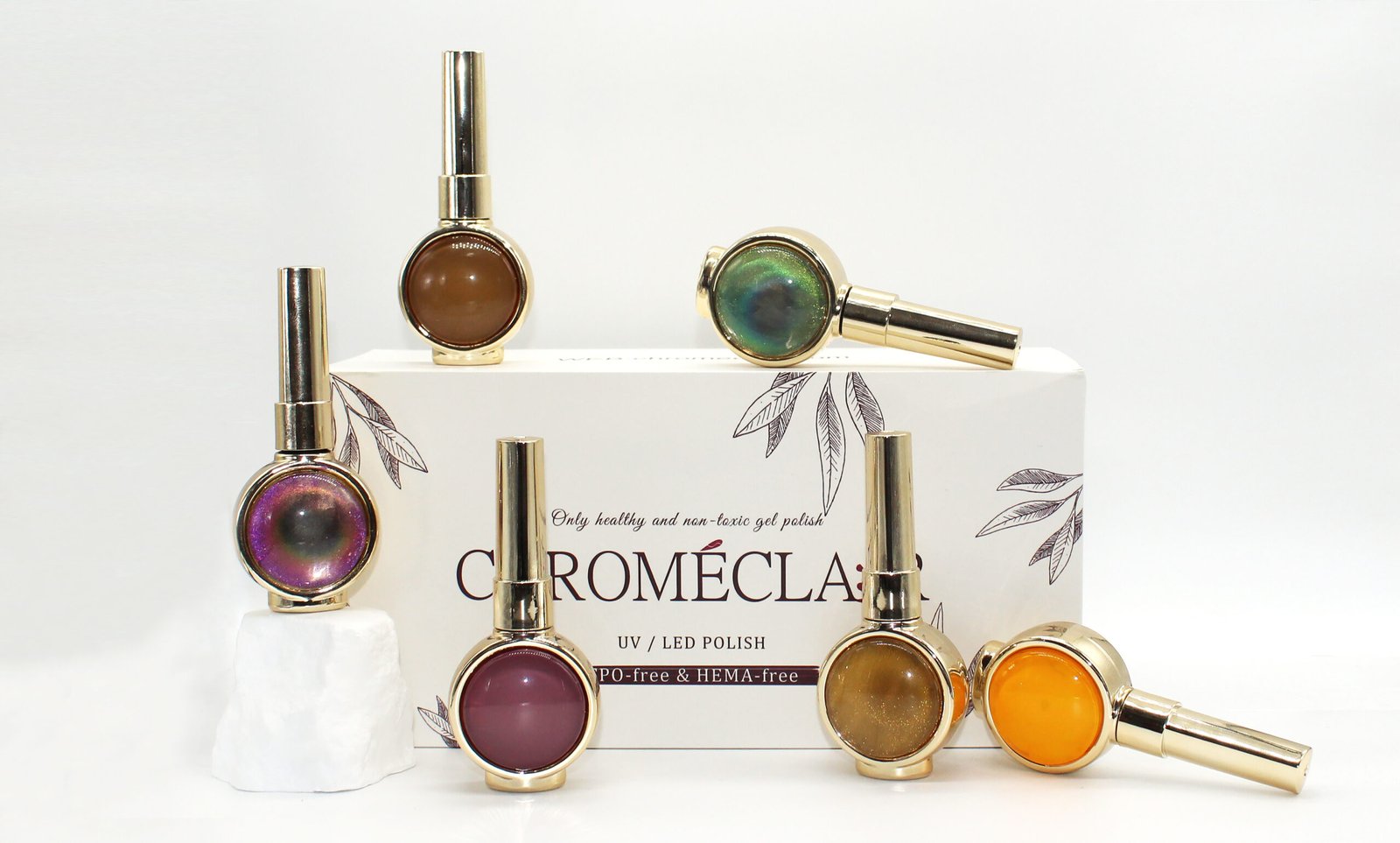
Comparing Allergy Protection in Gel Polishes
Explore the safety differences between gel polish types.
|
Features |
HEMA-Free & TPO-Free Gel Polish |
Regular Gel Polish |
|---|---|---|
|
Allergy Risk |
Low risk of allergic reactions. |
High risk due to HEMA and TPO. |
|
Durability |
Lasts up to 30 days. |
Lasts up to 21 days. |
|
Application Ease |
Easier to apply, less irritation. |
Requires careful application to avoid skin contact. |
|
Finish Quality |
High-gloss, vibrant finish. |
Glossy, smooth finish. |
|
Skin Compatibility |
Hypoallergenic, suitable for sensitive skin. |
May cause skin reactions. |
|
Ingredient Safety |
Free from HEMA and TPO. |
Contains HEMA and TPO. |
|
User Feedback |
Positive experiences reported. |
Mixed reviews, some allergic reactions. |
|
Regulatory Compliance |
Meets new safety regulations. |
May not comply with future regulations. |
You want to keep your nails and skin safe from allergies when picking between hema-free gel polish and regular gel polish. Many people now search for safer choices because more users say they get skin reactions from regular gel products. New rules in the beauty world and more people wanting safer products make brands create formulas that lower allergy risks. You can see a clear difference in how each type deals with sensitivity and safety.
Key Takeaways
HEMA-free gel polish lowers the chance of allergies. It is safer for people with sensitive skin.
HEMA-free and TPO-free gel polishes can last for 30 days. They are as strong or stronger than regular gel polish.
Always look at the ingredient list before you buy. Some products say ‘hypoallergenic’ but may not be safe.
New rules in the EU and UK will remove TPO from gel polishes. This means more choices that are safe for allergies.
Using HEMA-free gel polish can help your nails feel better. It is good if you have had reactions before.
HEMA and TPO in Gel Polish
What is HEMA?
HEMA is found in many gel polishes. HEMA means hydroxyethyl methacrylate. This chemical is a main part of UV and LED gel nail products. It helps the gel stick well to your nail. This makes your manicure last longer. HEMA gives the polish strength and flexibility. It also helps the polish not chip or lift. Many brands use HEMA for these reasons. But some people can get sensitive to it after a while. If you want to avoid this, you can try hema-free gel polish.
What is TPO?
TPO is also used in gel polish. TPO is called a photoinitiator. This means it helps the gel harden under UV or LED light. TPO is important for making your manicure set right.
TPO is a photoinitiator. It helps gel polish harden when you use UV or LED light.
It makes sure the gel polish sets well. This helps it last longer and not chip.
Without TPO or something like it, the polish would not cure right.
TPO works with other ingredients to give you a smooth finish that lasts.
Why They’re Used
Brands add HEMA and TPO to gel polish for a few reasons. The table below shows the main benefits:
|
Component |
Benefit |
|---|---|
|
HEMA |
Makes the polish stronger, helps it last, stops chipping and lifting. |
|
TPO |
Helps the polish cure fast under UV light, keeps the colour looking good. |
Regular gel polish needs these ingredients to work well. HEMA-free and TPO-free gel polish try to lower allergy risks but still work nicely. When you look at both, your choice depends on how sensitive you are and if you want your manicure to last.
Allergy Risks of Regular Gel Polish
Common Reactions
If you react to regular gel polish, you might see some symptoms. These can show up right after you use the polish or later on. The most usual reactions are:
Swelling
Eczema
Red skin near your nails
Skin peeling or blisters
Itchy and sore rashes
Nails getting loose or falling off
Bad rash on your face, neck, or chest
Breathing problems or worse asthma
Some people get reactions in other places, like their eyes or neck. These symptoms can make you feel bad and might change your daily routine.
Skin doctors found that 16% of people had problems after getting gel polish in salons. In a big study in the UK and Ireland, 1.5% of patients reacted to 2-hydroxyethyl methacrylate, and 2.4% reacted to at least one kind of (meth)acrylate. This shows there is a risk of allergies with regular gel polish.
HEMA and TPO Sensitivities
Regular gel polish has HEMA and TPO. These help the polish last longer and set well. But you can get sensitive to them. If you use gel polish a lot, your skin might get more sensitive. You could start with small irritation, but using it often can cause stronger allergies.
Picking hema-free gel polish can help if your skin is sensitive or you have reacted before. Changing to other options might stop these symptoms.
Allergy Development Over Time
You do not have to be a nail expert to get an allergy. Anyone who uses gel polish can become sensitive, even if you never had trouble before. Using it many times makes your risk go up. The British Association of Dermatologists says more people are getting allergies, especially since more people used home kits during the pandemic. Allergies can cause bad rashes and might even change future medical care.
Lots of people think only those with sensitive skin or allergies can get problems. That is not true. Social media sometimes makes the problem look bigger, but anyone can get an allergy if they use gel polish enough. You should learn about the risks and pick products that are right for you.
HEMA-Free Gel Polish and TPO-Free Alternatives
How HEMA-Free Gel Polish is Made
You might ask how hema-free gel polish is different. Makers take out HEMA, which can cause allergies. They use bigger molecules like DI-HEMA and BIS-HEMA instead. These do not go through the cured polish as easily. This helps lower the chance of skin problems. You still get a strong manicure that lasts long. The way you put it on and how it looks is almost the same as regular gel polish.
HEMA-free products do not use free-monomeric HEMA.
Bigger molecules are used to help stop allergies.
Taking out HEMA does not change how good or easy the polish is.
Benefits for Sensitive Users
If your skin is sensitive or you have allergies, these new polishes can help. HEMA-free and TPO-free gel polishes are safer for many people. You can buy special base coats, like superbond or rubber base coats, that do not have HEMA. These help your manicure last and keep your nails safe. Many people who had reactions before now pick these for peace of mind.
Superbond base coats help polish stick to oily nails.
HEMA-free base coats give a strong base for gel polish.
Rubber base coats make nails stronger without HEMA or D-HEMA.
Limitations and Considerations
Not every product called “hypoallergenic” is free from HEMA or TPO. Always look at the ingredient list to be sure. Some HEMA-free and TPO-free polishes need more time to cure or higher amounts to work well. They may not work for thick builder gel nails.
Many brands are changing their products to follow new rules. The EU has banned TPO in gel polishes. Salons must use safer products by September 2025. The UK will likely do the same by late 2026.
|
Regulatory Change |
Impact on Gel Polishes |
|---|---|
|
EU Ban on TPO |
Salons must stop using TPO-based products and use safer ones by September 1, 2025. |
|
UK Alignment |
The UK is expected to follow the EU ban by late 2026, so salons should get ready for TPO-free products. |
You will see more hema-free and TPO-free gel polish as these new rules start.
Allergy Protection: HEMA-Free vs Regular
Allergy Risk Comparison
You want to know which gel polish gives you better protection against allergies. Regular gel polish contains HEMA and TPO. These ingredients help your manicure last longer, but they can cause allergic reactions. HEMA is highly reactive. It can go through your skin and trigger strong allergies. You may see redness, swelling, or even blisters after using regular gel polish. The risk grows each time you use it.
HEMA-free gel polish removes this risk. Brands design these polishes for people who want safer options. You get a manicure that looks good and feels safe. The chance of getting an allergy drops when you choose HEMA-free gel polish. You do not have to worry about TPO either, as new formulas leave it out. The table below shows how the allergy risk compares:
|
Type of Gel Polish |
Allergy Risk |
Common Symptoms |
Suitable For |
|---|---|---|---|
|
Regular (with HEMA/TPO) |
High |
Redness, swelling, rash |
Most users, but not sensitive skin |
|
HEMA-Free & TPO-Free |
Low |
Rare, mild irritation |
Sensitive skin, allergy sufferers |
Tip: If you have had skin problems before, you should pick HEMA-free gel polish. This choice helps you avoid future reactions.
Expert and User Insights
Doctors who study allergies say you should avoid HEMA if you want to protect your skin. One well-known allergist explains that HEMA-free brands give you safer options. You do not need to risk your health for a nice manicure. Many users share their stories online. They say switching to HEMA-free gel polish stopped their skin problems. You see fewer cases of rashes and swelling when people use these new formulas.
Nail technicians also notice the difference. They see fewer clients with allergic reactions when they use HEMA-free and TPO-free products. You can trust these insights because they come from real experiences in salons and clinics.
Note: Experts agree that HEMA is a strong sensitiser. It can build up in your body and cause worse reactions over time. You should think about this when choosing your gel polish.
Real-World Experiences
People who use regular gel polish sometimes get bad reactions. You may know someone who had to stop using gel polish because of allergies. Social media shows many stories like this. Users post pictures of red, swollen fingers and warn others about the risks.
When you switch to HEMA-free gel polish, you see a change. Users report that their skin feels better. They do not get rashes or blisters. One user said, “After I changed to HEMA-free gel polish, my nails looked great and my skin stayed healthy.” Nail artists also share positive feedback. They say their clients feel safer and happier.
You can find many testimonials from people who had allergies before. They now enjoy beautiful nails without worry. This real-world feedback shows that HEMA-free and TPO-free gel polish is a smart choice for allergy protection.
Performance and Wear
Durability and Finish
You want your manicure to last as long as possible. Regular gel polish often promises strong wear, with many users seeing up to three weeks of chip-free nails. HEMA-free and TPO-free gel polish now matches or even exceeds this standard. You can expect wear time of up to 30 days without chipping. The finish also matters. Regular gel polish gives a glossy, smooth look. HEMA-free and TPO-free options deliver a high-gloss shine and vibrant colour, so you do not have to compromise on style. You get a salon-quality look whether you choose regular or allergy-safe gel polish.
|
Type of Gel Polish |
Wear Time |
Finish |
|---|---|---|
|
Regular (HEMA/TPO) |
Up to 21 days |
Glossy, smooth |
|
HEMA-Free & TPO-Free |
Up to 30 days |
High-gloss, vibrant |
Application Differences
You may wonder if applying HEMA-free and TPO-free gel polish feels different. Regular gel polish needs careful steps to avoid skin contact, which can trigger allergies. HEMA-free and TPO-free gel polish is easier to apply. You do not need to worry as much about irritation. Many users say the formula glides on smoothly and cures quickly under UV or LED light. Removal is also simpler. You can soak off the polish without harsh scraping. This makes allergy-safe gel polish a good choice for beginners and professionals.
Tip: If you want a stress-free manicure, try HEMA-free and TPO-free gel polish. You will find the process straightforward and gentle on your nails.
User Feedback
Users share their experiences with both types of gel polish. You see many positive comments about HEMA-free and TPO-free formulas:
You can wear HEMA-free gel polish for up to a month without chips.
You find the application and removal easier than regular gel polish.
You feel safer if you have sensitive skin or allergies.
You enjoy a glossy finish that rivals salon results.
Regular gel polish still has loyal fans who love its durability and shine. However, more users now switch to allergy-safe options for peace of mind and comfort. You can choose the formula that fits your needs best.
Who Should Use HEMA-Free Gel Polish?
Sensitive Skin and Allergy Sufferers
If your skin is sensitive or you have allergies, you should pick products that help you avoid reactions. HEMA-free gel polish is a safer choice. It does not use common allergens like HEMA, HPMA, OBOA, or DI-HEMA. Look at the table below to see if this polish is right for you:
|
Feature |
Description |
|---|---|
|
Hypoallergenic |
Yes |
|
Free from |
HEMA, HPMA, OBOA, DI-HEMA |
|
Suitable for |
Individuals with sensitive skin or a history of allergies |
You can feel safer using these polishes if you have had problems with regular gel polish before.
General Users
Even if you do not have allergies, you might want to protect your nails. Using HEMA-free gel polish can help stop new sensitivities from starting. Here is a simple table showing good and bad points for general users:
|
Benefit/Drawback |
Description |
|---|---|
|
Health Concerns |
HEMA in gel polish can cause allergies. |
|
Ease of Use |
Regular polish is easier to take off and does not need UV light. |
|
Nail Health |
Regular polish lets nails rest and heal between uses. |
Some people like regular polish for a natural look.
More people now pick ‘free-from’ polish for health.
Some go back to regular polish to avoid UV light.
Gel polish lasts longer and does not chip easily. If you bite your nails, gel polish can help you stop.
Professional and Home Use
You might get your nails done in a salon or do them at home. Salons can still use products with up to 35% HEMA, which means more risk for allergies. At home, rules are stricter. Shops cannot sell HEMA products for home use since September 2021. So, you will find more HEMA-free choices for home use.
|
User Type |
Regulation Impact |
Adoption of HEMA-free Products |
|---|---|---|
|
Professional |
HEMA allowed up to 35%, higher risk of allergies |
Lower adoption |
|
Home Users |
HEMA banned from shops, so safer choices are promoted |
Higher adoption |
Tip: If you do your nails at home, you will probably use HEMA-free gel polish. Salons may still use regular gel polish, so always ask what products they use.
Practical Considerations
Availability and Cost
You can buy regular gel polish in most shops. HEMA-free and TPO-free gel polish is now easier to find. More people want allergy-safe products, so shops sell them more. You see these polishes in special stores and on big websites. Some brands send their products to many countries. You can order online and get them at home.
Regular gel polish usually costs less money. HEMA-free and TPO-free gel polish can be more expensive. This is because they use new and safer ingredients. You pay a bit more to keep your skin safe. If you have allergies or sensitive skin, paying extra can be worth it.
Tip: Try to find deals or bundles when you shop for allergy-safe gel polish. You can save money and test new colours.
Drawbacks and Trade-Offs
You might still get allergies, even with HEMA-free gel polish. Doing your nails yourself can be risky. Getting your nails done by a professional is safer. Trained staff know how to use gel polish the right way. You get better results and lower your risk of skin problems.
If you do your nails at home, always follow the instructions. This helps you stay safe and avoid mistakes.
Regulatory Changes
New rules in the EU and UK are changing gel polish. The ban on TPO starts in September 2025. Brands must make TPO-free gel polish to follow the rules. Salons will need to use new products and get rid of old ones.
|
Evidence Description |
Impact on Gel Polishes |
|---|---|
|
Ban on TPO starting September 2025 |
Gel nail polishes with TPO will be banned, so salons must throw away old stock. |
|
Transition to TPO-free products |
Brands will make new safe products to protect customers. |
You will see more allergy-safe gel polish as brands change their products. This gives you safer choices and better protection for your nails and skin.
You now know that HEMA-free and TPO-free gel polishes protect you better from allergies than regular gel polish. Skin doctors and health groups say HEMA-free polish is best for people with sensitive skin or allergies. Think about these things when you choose your polish:
HEMA-free gel polish helps stop allergic reactions.
Softer formulas are good for sensitive nails and skin.
New rules will make allergy-safe polish easier to find.
Pick HEMA-free and TPO-free gel polish if you want safe nails that last a long time.
FAQ
What is the main difference between HEMA-free and regular gel polish?
You get HEMA-free gel polish without HEMA or TPO. Regular gel polish contains these chemicals. HEMA-free options lower your risk of allergies. Regular gel polish may cause reactions if you have sensitive skin.
Can HEMA-free and TPO-free gel polish last as long as regular gel polish?
You can expect similar durability from both types. Many HEMA-free and TPO-free gel polishes last up to 30 days. Regular gel polish usually lasts around 21 days. Both give you a glossy finish.
Is HEMA-free gel polish safer for everyone?
You get better protection if you have sensitive skin or allergies. Most people find HEMA-free gel polish safer. Regular gel polish may suit you if you have never had a reaction, but risk increases with repeated use.
Do I need special tools to apply HEMA-free gel polish?
You use the same UV or LED lamp for both types. Application steps are similar. You do not need extra tools. Always follow the instructions for best results.
Are HEMA-free and TPO-free gel polishes more expensive than regular gel polish?
You may pay more for allergy-safe gel polish. Safer ingredients and new formulas cost more. Regular gel polish is often cheaper, but you get extra protection with HEMA-free and TPO-free options.
 English
  Spanish
  German
  French
  Italian
  Dutch
Dutch