
Everyone knows this feeling. Your manicure done with gel is still flawless; however, you are totally fed up with its color. You don’t want to spend time having your nails removed and, quite frankly, you shouldn’t have to.
So, is it possible just to paint over your manicure with a new shade? Yes, of course. However, there is right and wrong method of doing it. We will cover all necessary information from reasons for doing so, process itself, potential mistakes and final results.
What Makes Gel Nails Different in the First Place
Before we jump into the “how-to” part, let’s see what exactly you are dealing with here.
Gel nails are polymerized under a UV/LED light source. This means that the formation of the polymerized network explains why the product is so chip-resistant and shiny. Nail polish, on the other hand, only dries due to evaporation. There is neither a light source nor any kind of reaction going on there.
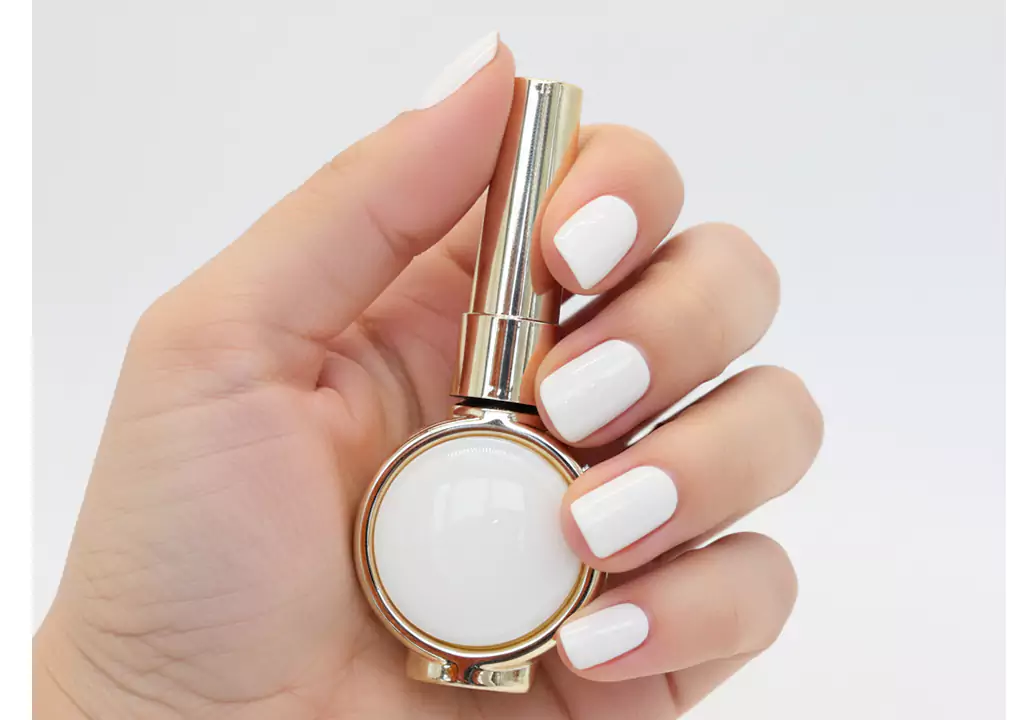
It’s precisely for this reason that gel polish can stay in shape for two to four weeks, whereas nail polish starts chipping after just a few days. This also explains the fact that the former doesn’t stick well to the latter. We’ll discuss it further.
Recommended next step
HEMA/TPO-Free Starter Routine
First time trying CHROMÉCLAIR? Start with a small, compatible routine instead of one random bottle.
- Choose a HEMA/TPO-free color or set.
- Pair it with a compatible base and top coat.
- Use the same system for a smoother first manicure.
Shop starter routine kitStart with UV1 7PCSCompare all routines
Why Bother Putting Regular Polish Over Gel?
Actually, there are many positive aspects about doing that.
- You are bored of your current nail polish color and want a fast color change, but your base is perfectly fine. You can easily paint your nails with any other nail polish in just ten minutes.
- You want to try creating some nail designs. There are so many shades and finishes in regular nail polish compared to gel polish. Holographic, duochrome, jelly, ultra-matte – if anything is found in regular polish, you can use it on top of gel polish!
- Your gel manicure is gradually fading. When you get rid of that dull color on your nails, you can easily apply another one over the old color.
- You want to test your new gel polish shade. Try swatching a particular gel polish in regular nail polish first to be sure whether the chosen shade is what you really need – you won’t have to redo the manicure within three weeks after that.
- You are not able to cure polish with a UV light right now. Are you traveling, at your best friend’s place or simply far from your UV light? Not a problem at all!
The One Thing That Makes or Breaks This Technique
This is what no one really knows: the final step in curing the gel top coat polish should leave you with a surface that is shiny, flawless, and resistant to stains. It is also the main reason why ordinary polish will not adhere to the surface.
Think about it as applying paint on a wet window pane: there is simply nothing that would help the paint stick to such a perfectly smooth surface.
That is why many people give up their attempts and blame the whole idea. However, they missed out on one crucial step.
Step-by-Step: How to Do It Right
Step 1: Clean Nails Are Non-Negotiable
Wash your hands and make sure there’s no oil, lotion, or product residue anywhere near your nails. Even a small amount of oil will stop the polish from adhering — so don’t skip this, even if your hands feel clean.
Step 2: Lightly Buff the Gel Surface
Before proceeding, thoroughly wash your hands, ensuring there is absolutely zero oil, moisturizer, or any other product on or around them. Just a tiny bit of the substance will affect the polish adhesion, so do not neglect this step no matter how good your hands’ condition seems to be.
Step 3: Wipe Everything Down
Once polishing is done, use a lint-free pad soaked in isopropyl alcohol (nail cleanser) to clean up each of the nails.
Step 4: Base Coat — Optional, But Worth It
The gel polish under your fingernails provides a base coat for regular polish. However, adding an additional thin base coat layer will enhance adhesion and simplify removal. For those looking to apply the color temporarily, using a peelable base coat will be very convenient because removing the color will not affect the gel polish.
Step 5: Apply Polish in Thin Layers
Here lies the pitfall that most beginners face. Applying too many layers of regular polish on top of the gel polish will result in a non-drying layer that slides off easily. Make sure you apply just one layer at a time and let it dry completely. You can apply a second layer to achieve a richer color.
Step 6: Finish with a Regular Top Coat
Complete your manicure by applying a regular top coat. You should avoid using a gel top coat here because gel top coats require UV exposure for curing and when applied over regular polish it may lead to peeling and other unpleasant effects. Regular top coat will do.
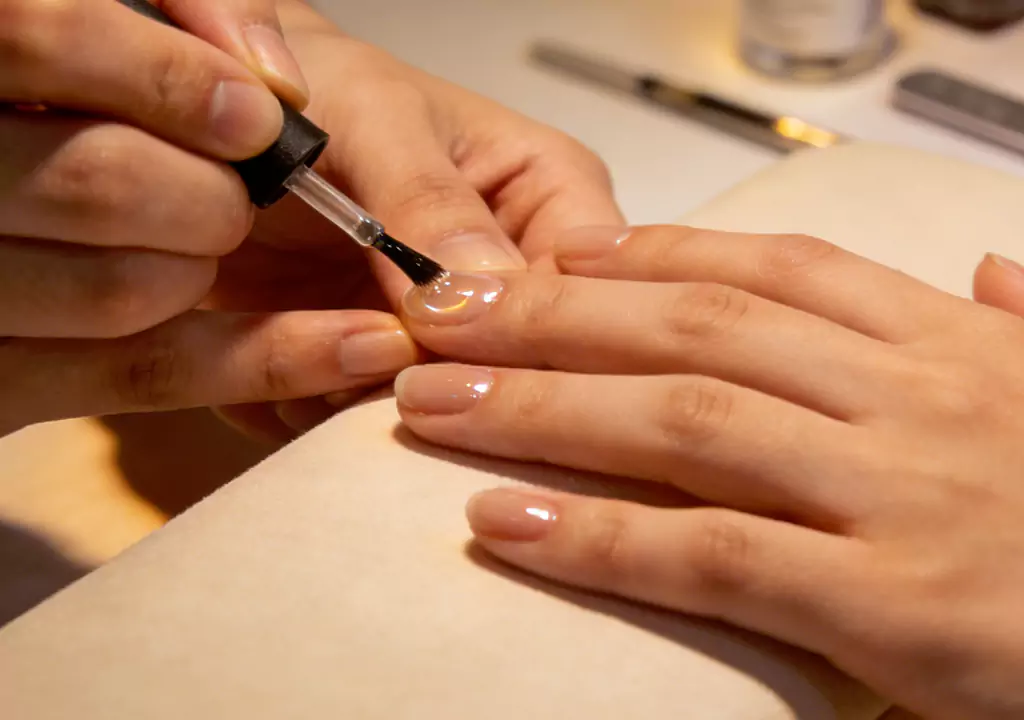
Step 7: Wait Until It Dries Completely
This may sound quite stupid, but it really is crucial. Give enough time to the layers to become completely dry. Otherwise, you’ll get yourself in trouble and your manicure may turn out to be completely ruined.
How Long Will It Last?
But let’s be realistic about what we expect. Putting normal polish over gel polish will not stay on your nails as long as a gel color treatment does. Consider the following situation:
- 2-4 days under normal conditions
- Tends to peel off at the tips more often
- Cures just like regular polish; no light is needed
That is perfectly acceptable, however, because that is not even the goal. This is not supposed to substitute for gel polish, but is a convenient solution when a complete gel polish treatment is not desired.
Removal Is the Best Part
Forget soaking. Forget foil wraps. Forget filing anything down.
Just use nail polish remover – non-acetone would be preferable here since acetone might impact the base of your gel manicure – and simply wipe it off. And that’s pretty much all there is to it. The entire gel manicure will remain intact until you decide to put a new coat over the previous one whenever you wish to.
And this is actually very beneficial for the condition of your nails. With each and every full removal of a gel polish, you’ll have your nails soaked in acetone – and sometimes buffed – which is not the best for their state.
Mistakes That’ll Make This Go Wrong
Not buffing first. This is the number one reason the technique fails. No texture = no grip = peeling polish. Don’t skip it.
Going in with thick coats. Thick layers trap moisture underneath and never dry properly. Always thin.
Using acetone remover. Acetone can soften or damage the gel polish layer beneath. Acetone-free is the move.
Expecting it to last like gel. It won’t, and that’s okay. Adjust your expectations accordingly.
Forgetting to cleanse after buffing. Buffing dust on the nail surface kills adhesion just as effectively as oil does. Wipe it clean every time.
Is This Actually Good for Your Nails?
Yes — done properly, this technique is pretty nail-friendly.
The gel polish underneath continues to protect your natural nail the whole time. You’re not exposing it to anything harsh, and as long as you use a gentle, acetone-free remover to take the color off, nothing’s being stripped or damaged.
A lot of nail professionals actually recommend this approach over frequent gel removal cycles. Repeated acetone soaking is one of the main things that leaves nails thin and brittle over time. Keeping the gel polish base in place and layering color on top is a genuinely smart way to maintain your manicure over the long haul.
Quick Answers to Common Questions
- Will regular polish ruin my gel manicure?
Not if you follow the steps. Prep the surface, use thin coats, and remove with acetone-free remover — your gel polish will be fine.
- Do I need to cure the regular polish under a lamp?
Definitely not, since regular nail polish is an air-dry type of product, and there is no need to cure it using a UV or LED lamp.
- Can I do nail art on top of gel nails?
Absolutely. Once your gel polish surface is buffed and cleaned, it’s a perfectly good canvas for stamping, hand-painted designs, glitter, you name it.
- How often can I repeat this?
As often as you want. Just be gentle with removal each time and don’t go overboard with the buffing — you want to maintain the gel polish layer, not wear it down.
Bottom Line
Putting regular nail polish over gel nails is genuinely easy once you know the one rule: prep the surface. Buff lightly to break the gloss, cleanse thoroughly, apply thin coats, and seal with a regular top coat. That’s the whole formula. Done right, you get a fresh, polished look in under 20 minutes — no appointment, no lamp, no drama.
It’s a great way to get more out of your gel polish manicure, try new colors freely, and keep your nails in better shape over time. Once you get the hang of it, you’ll wonder why you ever did it any other way.
 English
  Spanish
  German
  French
  Italian
  Dutch
Dutch