

Hello, I’m Starry. If you’ve had friends or clients ask you lately, “Cat eye gel has metal particles in it. Does that mean it conducts electricity?” I’m not just going to give you a quick “no.” Instead, I’ll break down the real material science behind it, share what I’ve observed over years in the industry, and clear up a few other persistent nail myths while I’m at it.
Cat Eye Magnetic Powder & Conductivity Why This Worry Is a Misconception
Most people worry about conductivity because they know cat eye gel uses magnetic powder, iron powder, magnetite, or other metal oxide particles. It’s true that metals conduct electricity. But here’s the key point electricity needs a continuous pathway to flow and that’s something cat eye gel simply cannot provide.
The base of gel polish is a polymer resin, which is an excellent electrical insulator. The magnetic particles are evenly dispersed throughout this resin, separated by the insulating formula, so they never connect to form a full conductive channel. I remember testing a new cat eye gel formula once, and a colleague jokingly used a multimeter on a fully cured sample. The needle didn’t move at all. Its insulating properties were exactly the same as regular gel polish. This isn’t a coincidence it’s simply how the material is structured.
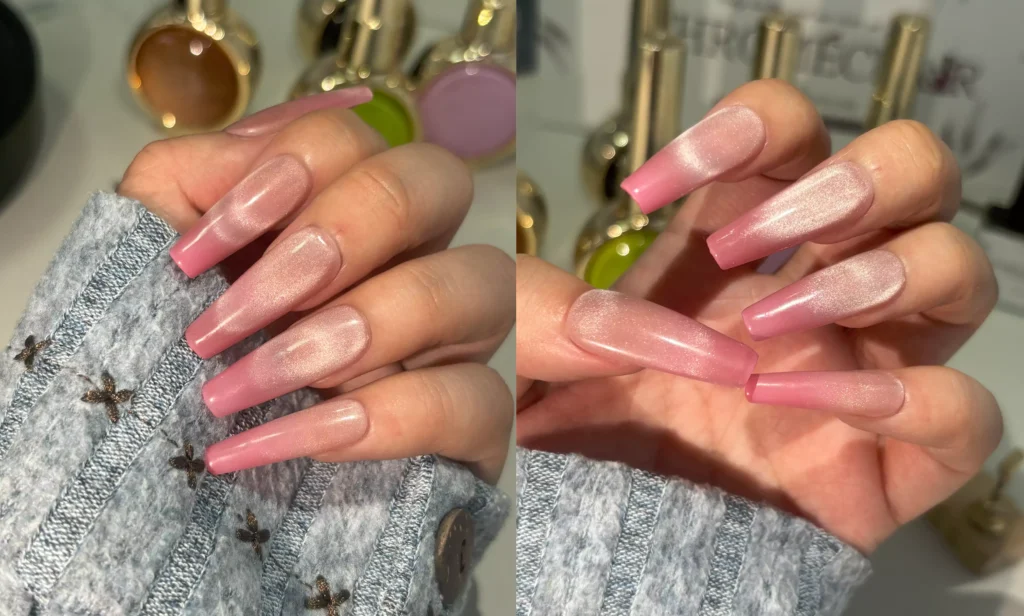
Once cured, UV light triggers cross-linking polymerization, locking the magnetic powder firmly in place. Not only can electricity not pass through, but moisture and oxygen can barely reach the powder itself. In terms of electrical performance, cured cat eye gel behaves no differently from standard cured gel polish.
I totally get why people link magnetism and electricity they often go hand in hand in daily life. But in this case, the microscopic structure of the gel breaks that connection entirely.
Quick Important Notes Static Electricity & MRI
Since we’re on the topic of electricity, there are two more points worth clarifying.
Static Electricity
Cat eye nails don’t build up static any more than regular manicures. Static buildup and discharge depend on a material’s surface resistivity. Cured cat eye gel is still an insulator, with similar surface resistivity to regular gel. Getting a small static shock from a doorknob has nothing to do with cat eye polish. It’s just ordinary static from dry weather, plain and simple.
MRI Scans
This is a much more reasonable concern. The magnetic powder in cat eye gel contains metallic components, which could theoretically cause minor interference in high-resolution hand or finger MRI scans. That said, the effect is very mild, and there are no reported cases of serious clinical issues related to it. If you’re getting a detailed hand MRI, it’s safer to inform your doctor and remove the polish beforehand. For routine checkups, there’s no need to worry at all.
4 Common Nail Myths Busted From a Material Expert’s View
After years working with nail materials, I’ve noticed something about beauty myths. They sound logical at first glance, but fall apart once you look at the actual science. Here are the ones I get asked about most often.
Myth 1 Long-Term Gel Use Makes Nails “Suffocate”
I still see this claim all over nail groups, often paired with photos of yellowed nails as “proof.”
In reality, the nail plate, the hard visible part of your nail, is made of keratinized dead cells. It doesn’t breathe or exchange gases at all. Nails receive oxygen and nutrients from blood flow in the nail bed, not from air touching the surface. Covering them with gel doesn’t harm their growth or health.
Nail yellowing usually comes from pigment staining especially dark polishes without a base coat or fungal infections not “suffocation.”
Myth 2 UV Nail Lamps Cause Skin Cancer
This one deserves a balanced answer, not an extreme yes or no.
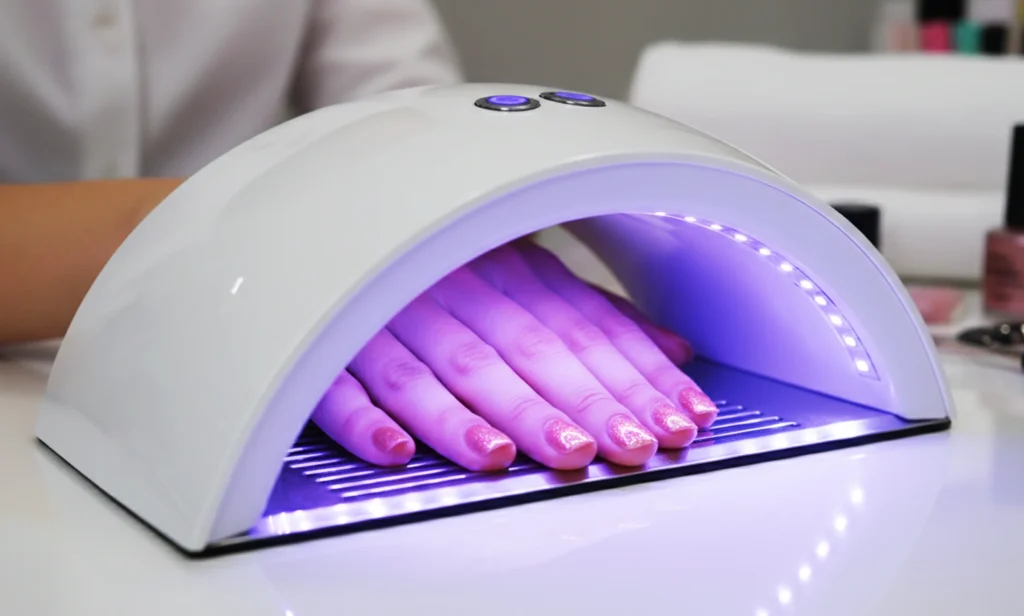
Nail curing lamps mainly emit UVA, which can contribute to skin aging with frequent, long-term exposure. That being said, during a typical manicure, exposure time is short and the dosage is low. If you get gel manicures often, simply apply sunscreen to your hands or wear UV-protective gloves before curing. It’s easy and effective.
Myth 3 Nails Get Thinner Because Gel “Eats Them Away”
Gel polish really doesn’t deserve this bad reputation.
Modern gel formulas are chemically stable and won’t dissolve or corrode the nail plate. Nails become thin almost always because of poor removal practices over filing, prying or peeling off lifted gel, and scraping away layers of the nail itself. In my material tests, I regularly measure nail thickness before and after removal. With proper chemical removal and gentle filing, the nail plate only experiences minimal, acceptable wear.
The real issue isn’t getting gel manicures it’s removing them the right way.
Myth 4 Gel Chemicals Seep Into Your Bloodstream
Nails form a dense, keratin based barrier that blocks large molecules very effectively. Most volatile solvents in gel polish evaporate during application, so only an extremely tiny amount could ever penetrate the nail plate.
On top of that, reputable brands have greatly reduced or removed controversial ingredients like formaldehyde and toluene. Using certified, safe products in a well ventilated space means regular manicures don’t pose meaningful health risks.
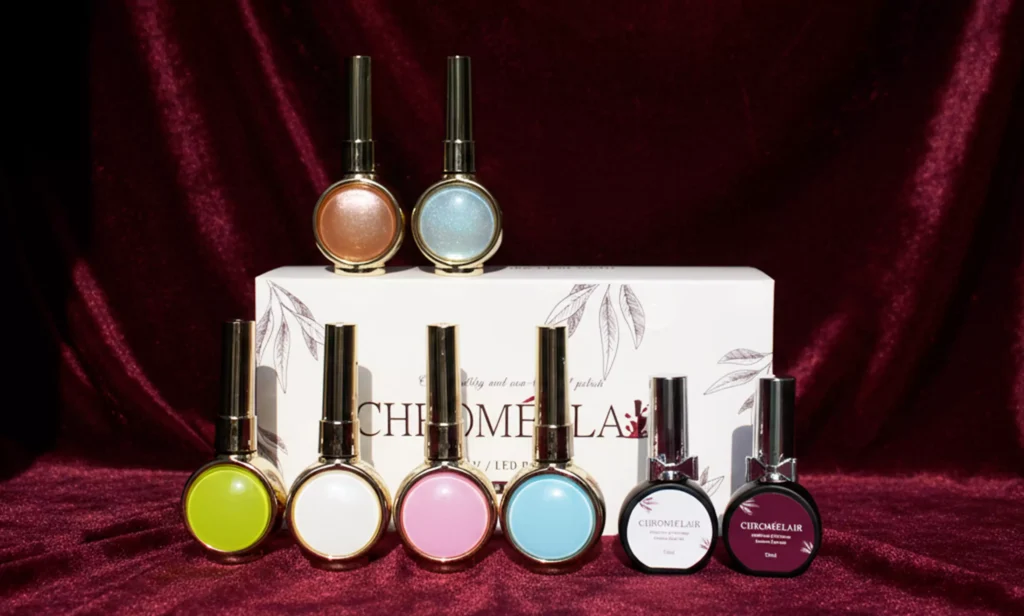
I’ve also been glad to see the industry improve in recent years. Take CHROMÉCLAIR a professional salon grade gel brand for example. Its new formulas boast a dual clean label HEMA free & TPO Free. This isn’t just about removing ingredients. It represents a full shift toward safer, lower irritation professional nail care, without sacrificing salon level color retention and shine. For frequent clients or anyone with HEMA allergies, these formulas finally let you enjoy safety and results, rather than choosing one over the other.
Why These Myths Keep Spreading
From my experience, most nail myths share three common traits.
They sound logically plausible on the surface, but skip crucial scientific details.
They spread through social media screenshots with no real data or professional backing.
They rely on fear based words like “toxic,” “carcinogenic,” or “dangerous” to grab attention.
I’ve made a habit in my work. Whenever I see a claim about nail product safety, I first ask does this actually hold up chemically or physically? If the basic logic doesn’t check out, the rest is just fearmongering not worth your time.
 English
  Spanish
  German
  French
  Italian
  Dutch
Dutch