
What are the key factors that distinguish rubber base coat from normal base coat? The answer becomes clear once we take a closer look at their functions. Rubber Base Coat offers added flexibility to your nails and helps them withstand more stress. It flexes together with the nail and reduces chances of nail breakage. Normal base coat is more rigid and works better for those who prefer a plain nail polish coating. In case of weak or brittle nails, it does make a difference.
Principaux enseignements
- Les Couche de base en caoutchouc can bend and is sturdy. This product is perfect for individuals who have brittle nails.
- The Regular Couche de base prepares the nails to hold the polish. This product prevents stains and works well with healthy nails.
- The Rubber Base Coat should be considered by those who have breaking and chipping nails. This product provides extra strength and protection for the nails.
- It is important to prepare the nails before applying a base coat. This will allow the base coat to adhere better.
- It is essential to consider the type of nails and needs before selecting a base coat.
Couche de base en caoutchouc vs couche de base ordinaire
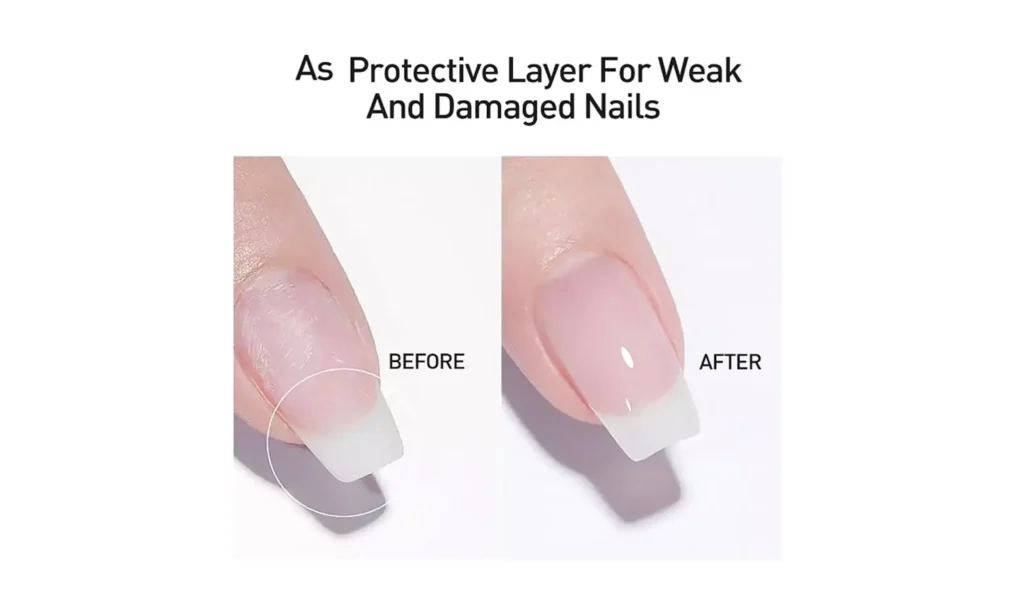
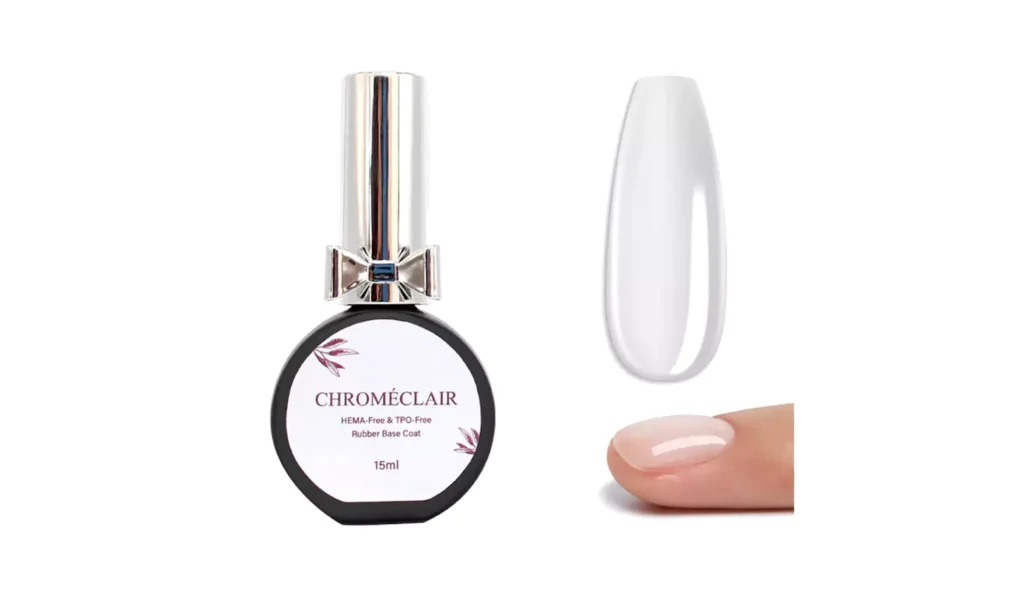
Vue d'ensemble de la couche de base en caoutchouc
You may be asking yourself what makes the Rubber Base Coat unique. The rubber base coat is different from other types of base coats in that it provides you with an extra-strong yet flexible foundation for your nails. It gives you a thicker base coat that flexes with the movement of your nails, thus helping to avoid any cracks or breaks that may arise due to their movement.
Voici ce que l'on trouve généralement dans une couche de base pour caoutchouc :
- Acrylates provide the foundation for the product and allow curing under UV or LED light.
- The photoinitiator initiates the curing reaction after irradiation using a light source.
- The plasticizer makes the base elastic and prevents it from becoming brittle.
- The UV inhibitor protects the manicure from UV radiation from the sun.
- The pigment provides the product with color; however, there is a colorless version available.
- Oligomers give thickness and strength to the product.
- Solvents increase the fluidity of the manicure.
- Additives provide flow properties and prevent bacterial growth.
Vous obtenez une base coussinée qui dure plus longtemps, même si vos ongles ont besoin d'un soin particulier.
Aperçu de la couche de base régulière
The effect of applying a regular base coat is different. You apply it in order to create a smooth and sticky surface that will allow your nail polish to adhere properly. The regular base coat is usually more thin and less elastic than the thick one. This will fill in little bumps on your nails and ensure better adhesion of the polish.
L'objectif principal d'une couche de base ordinaire est de.. :
- Protect your natural nail from the harmful effects of pigment colors.
- Increase the durability of your polish, preventing chipping and flaking.
- Seal any small crevices for a flawless appearance.
You have a straightforward application process, convenient for your daily manicure routine.
Principales différences de formule
Voyons ce qu'il en est Principales différences entre ces deux couches de base. Vous pouvez constater que chacune d'entre elles répond à des besoins différents.
| Type de couche de base | Viscosité | Flexibilité |
|---|---|---|
| Couche de base ordinaire | Plus mince | Moins flexible |
| Couche de base en caoutchouc | Plus épais | Plus flexible |
- Les gels à base de caoutchouc créent une couche plus épaisse et plus élastique. Ils se déplacent avec l'ongle et aident à prévenir les fissures.
- Les vernis de base ordinaires sont plus fins et moins flexibles. Elles peuvent s'écailler ou se décoller si vos ongles se plient beaucoup.
CHROMÉCLAIR does not just provide you with its Rubber Base Coat, but it gives you an entire range of gel polishes that are absolutely free from HEMA and TPO—Diamond, Matte, No-Wipe Top Coats, Transfer Gel, and Gel de construction. More importantly, it is not just about omitting certain substances, but it is about totally changing the approach to nail health. This means that there is no chance for any allergic reaction, and you can enjoy high-gloss and salon-grade color retention at the same time.
Conseil : Si vos ongles sont fragiles ou abîmés, vous pouvez essayer une couche de base en caoutchouc. Elle vous donne plus de force et permet à votre manucure de durer plus longtemps.
Selection of a correct base coat will be determined by the type of nails and the purpose you have in mind while doing manicure. In case you require more resistance and flexibility, then you should select the rubber base coat, but when you want a basic base coat and have strong nails, then the ordinary base coat is ideal.
Avantages et utilisations idéales
Flexibilité et force
When trying to make your manicure durable, you need to ensure that your manicure is both flexible and tough. One such product is the Rubber Base Coat. What is special about the base coat is that it remains flexible after being cured with light from a lamp. It thus adapts to the natural movements of the nail, and you end up having fewer cracks or fractures. Because of its tough consistency, the base is easier to apply on your nails, making it unlikely that your polish would peel or lift off. If your nails are weak, you will appreciate this base’s properties.
Les meilleurs types d'ongles pour chacun
The nails may be different, and therefore picking the right base coat is very important. Here are some considerations:
In case you have thin and weak nails, the use of a base coat like the rubber Base Coat will be able to stretch alongside your nails for better effects.
If you feel that you are sensitive towards certain types of nail paints, you can try several brands until you get used to one.
If you have weak nails, then regular gel nail polish may not be able to adhere.
Pour les couches de base ordinaires, plusieurs options s'offrent à vous en fonction de vos besoins en matière d'ongles :
| Type de couche de base | Description |
|---|---|
| Renforcement | Bon pour les ongles fragiles, apporte un soutien supplémentaire. |
| Remplissage des crêtes | Lisse les surfaces irrégulières pour un aspect impeccable. |
| Nourrir | Contient des vitamines et des huiles pour des ongles plus sains. |
| Hydratant | Aide à éviter le dessèchement des ongles. |
| Multi-tâches | Combine plusieurs avantages pour les personnes occupées. |
Longévité et protection
For your manicure to remain as fresh as possible, you would require as much time as possible. A rubber base coat will provide your nails with a protective coating that stretches with them, protecting them from any form of damage, including chipping and cracking. This is because the rubber-like material shields your nails from all forms of injuries. Base coats do the same thing, except that they offer protection against staining and help the polish to cling better.
Conseil : si vous remarquez que vos ongles s'écaillent ou se cassent souvent, essayez de passer à une base en caoutchouc pour plus de durabilité.
Application et retrait
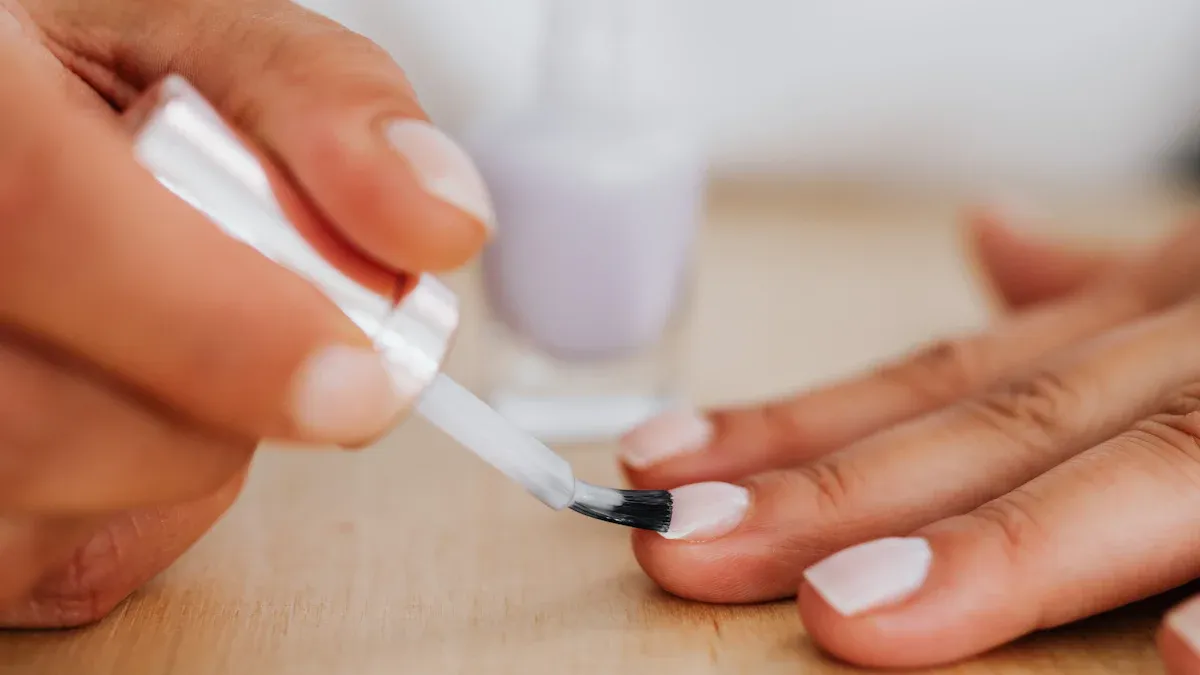
Comment appliquer la couche de base pour caoutchouc
A process of applying a rubber base coat begins with appropriate preparation of the nails. They are shaped, cuticles are pushed back, nail is buffed, and dust is removed. Then, you ensure that your nails are clean and dry. Now, you apply a slim layer of base gel but without curing it. You put a little amount of gel by the cuticle and drag it to the tips. A liner brush helps you cover your nails to the edges and near the cuticle. There is a technique that involves turning your hand upside down to let gel level off to create a beautiful apex. You tap your nails to allow it to level itself. When done shaping, you cure your nails for 60 to 120 seconds under a UV/LED lamp.
Comment appliquer la couche de base ordinaire
Applying a regular base coat is easy and fast. Begin with clean and dry nails. Take off any previous polish, then push your cuticles back. Buff your nail beds softly to enhance adhesion. Paint a thin and consistent base coat on your nails. Be sure to cover the whole nail and seal its borders to minimize chipping. Curing a base coat using a UV or LED lamp may be necessary for some brands. Regular base coats can dry normally in the air, but gels will require a curing lamp.
| Type de couche de base | Temps de durcissement |
|---|---|
| Couche de base en caoutchouc | 60-120 secondes |
| Couche de base ordinaire | Nécessite une lampe UV/LED |
Conseil : sceller les bords de vos ongles permet à votre manucure de durer plus longtemps et d'éviter les éclats.
Processus de retrait et conseils
It is necessary to care for your nails when removing your manicure. In either case, begin with gently filing the surface layer to create a rupture in the seal. Apply a cotton ball soaked in acetone to the nail and wrap it with foil. Leave it on for approximately 10 to 15 minutes. Test whether the base coat comes off easily. You can use a wooden rod or cuticle tool to remove the gel polish. Be sure not to scratch your nail bed harshly.
Remarque : N'enlevez jamais votre couche de base. Le pelage peut endommager vos ongles naturels et les rendre plus fragiles.
Choisir la bonne couche de base
Convient aux ongles faibles ou endommagés
What do you need to keep in mind when looking for a base coat for weak or damaged nails? You should be looking for a product that will reinforce your nails and help them get healthier. First, identify your nail type. Do you find that your nails split or are peeling? In such a case, it will do you good to apply some strengthener to your nails. There are base coats with biotin or vitamin E in them.
Here is some guidance to assist you in selecting an appropriate base coat depending on your nail status:
- Determine whether you have thin, splitting, or fragile nails.
- Confirm whether your base coat will be compatible with your UV or LED light.
- Consider the ingredients that are present within the base coat and avoid those that cause allergies.
- Consider purchasing a base coat with leveling characteristics.
- Consider the longevity of the base coat by reading customer reviews.
- Go for reliable manufacturers and consider their policies regarding returns and refunds.
Conseil : si vos ongles présentent des stries, optez pour une couche de base qui les comble. Ce type de vernis lisse la surface et donne à votre vernis un aspect uniforme.
Porté au quotidien et besoins particuliers
When choosing a base coat for everyday or special occasions, it is important to consider your personal life and what you hope to achieve with your manicure. Some base coats may be better suited for your day-to-day activities, whereas other base coats would be more appropriate for a party or a work event.
- Base coat with stain resistance would be ideal for someone looking to shield their nails against potential discoloration.
- Base coat that is flexible will allow you to apply nail art without worrying about any lifting or cracking.
- Lightweight base coat would be perfect for someone who likes to keep their nails natural-looking.
Voici un tableau qui montre ce que l'on obtient avec une couche de base flexible :
| Bénéfice | Description |
|---|---|
| Flexible et confortable | Se déplace avec l'ongle, ce qui réduit le risque de soulèvement ou de fissuration. |
| Sensation de légèreté | Plus fin que le gel de construction, il donne un aspect et une sensation naturels. |
| Renforce sans extension | Ajoute une protection sans encombrer les ongles. |
| Application rapide | Durcit rapidement et nécessite peu de limage. |
Note : Pour de meilleurs résultats, essayez d'utiliser un couche de base et vernis de la même marque. Ils sont conçus pour fonctionner ensemble.
Now you are aware of the differences between the two types of base coats discussed here. Rubber base coats are thicker in texture and require more time for drying; they, however, are flexible and durable. Ordinary base coats are thinner and quicker to dry. It is claimed by many people that rubber base coats provide for beautiful nails during many weeks. Thin or fragile nails are better off with rubber base coats.
FAQ
What is the purpose of using a rubber base coat?
To make your nails more flexible and durable, you need to apply a rubber base coat. In addition, it will help prevent cracking and chipping. This type of coating is recommended if you have brittle and easily bendable nails.
Why is there a difference between a regular base coat and a rubber base coat?
As for the difference, a regular base coat is thinner than the latter. Also, a regular base coat makes nails smoother, while a rubber base coat makes them stronger.
Which nail types can be treated with a rubber base coat?
If your nails are thin, weak, and damaged, you should use a rubber base coat to restore them.
What should you prepare before applying any base coat?
Before applying a base coat, it is essential to cleanse, trim, and buff your nails.
 English
  Spanish
  German
  French
  Italian
  Dutch
Dutch