
Als je ooit een nagelstyliste aan het werk hebt gezien, is het je vast opgevallen dat ze altijd eerst een transparante topcoat aanbrengen, dan de kleurlak en tot slot nog een transparante topcoat eroverheen. Twee extra stappen, en het resultaat ziet er bijna hetzelfde uit. Maar zijn ze echt nodig? Het antwoord is volmondig ja. De twee onbezongen helden van de perfecte manicure zijn de Rubber Grondlaag en de Diamant Top Coat, En het begrijpen van de functie van elk ervan is het verschil tussen nagellak die een week meegaat en nagellak die op dinsdag al afbladdert.
Laten we eens bekijken wat ze precies doen, waarom je ze niet kunt overslaan en hoe je ze als een professional gebruikt.
Wat is een basiscoating?
De basislaag Dit is de eerste laag die je aanbrengt vóór de gekleurde lak. Het is vergelijkbaar met een primerlaag bij het spuiten van een auto en zorgt ervoor dat alles wat volgt er beter uitziet en langer meegaat.
Dit is wat een goede basislaag daadwerkelijk doet:
1. Het voorkomt verkleuring van de nagels. Als je ooit hebt geprobeerd een donkere, sterk gepigmenteerde kleur te verwijderen, zoals dieprood, marineblauw of zwart, weet je hoe moeilijk het kan zijn om die gelige vlek eruit te krijgen. Een basecoat vormt een barrière tussen je natuurlijke nagel en het pigment, waardoor er geen verkleuring ontstaat.
Aanbevolen volgende stap
Gladde, langdurige gelroutine
Blaren, afbladderen, krimpen en een doffe uitstraling zijn meestal systeemproblemen. Bouw de manicure op door eerst de basislak, dan de kleurlak en tot slot de topcoat te combineren.
- Bereid de nagelplaat voor op het lakken.
- Gebruik een basislak die bij het gelsysteem past.
- Werk af met een bijpassende topcoat voor slijtvastheid en glans.
Koop een langdurige routinekitZie de toplaag die niet hoeft te worden afgeveegd.Vergelijk alle routines
2.Het verlengt de levensduur van je manicure De basislaag heeft een licht kleverige afwerking, die een oppervlak biedt waar je gekleurde laag nagellak aan kan hechten. Hoe beter de hechting, hoe langer je manicure meegaat en dit is de belangrijkste reden waarom je zelfgemaakte manicure nooit zo lang lijkt te duren als een manicure in een salon.
3. Egaliseert imperfecties Richels, ongelijkmatige textuur, kleine dipjes - een ridge-filling base coat egaliseert het nageloppervlak zodat de kleur er gelijkmatig en soepel op glijdt. Dit geeft een veel meer gepolijste look dan kleur die zonder base coat direct op de nagel wordt aangebracht.
4. Voedt terwijl je nagellak draagt De base coats van vandaag doen dubbele diensten! Veel base coats bevatten vitaminen, proteïnen en versterkende stoffen om de nagel te voeden terwijl je je kleur draagt. Merken zoals Chroméclair, beroemd om hun pure en HEMA- en TPO-vrije ingrediënten, hebben nagelverzorging tot de kern van hun base coat productlijn gemaakt.
5. Kan een transparante of neon kleur niet zo goed uitkomen als in het flesje? Probeer een witte base coat en zie hoe het de verzadiging van de kleur kan versterken!
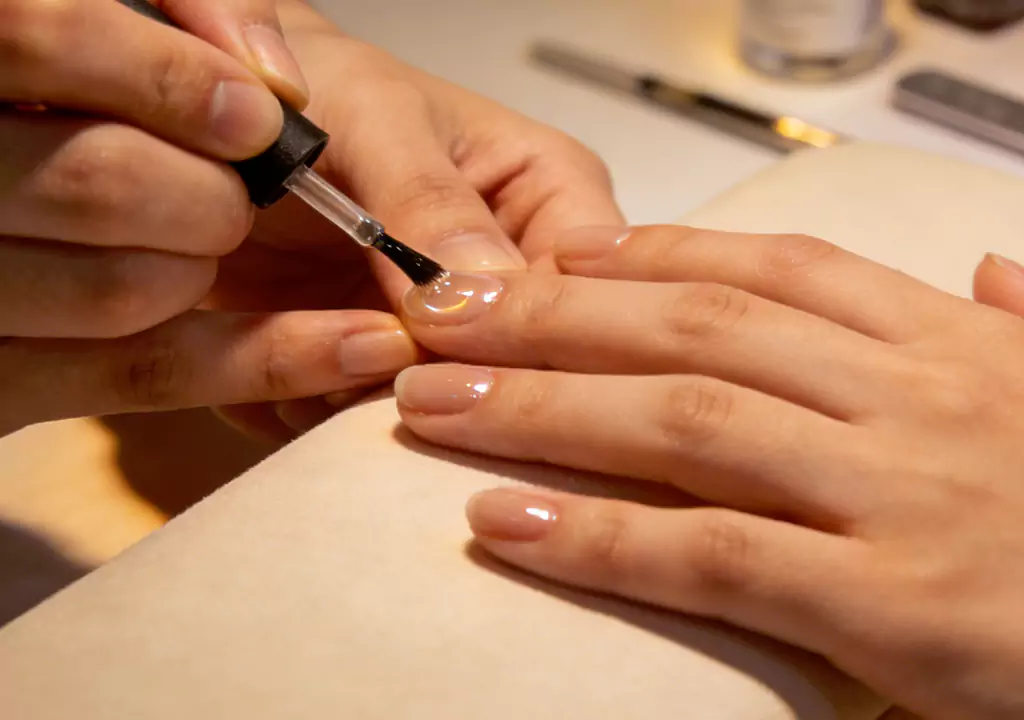
Wat is een topcoat?
A toplaag Dit is de laatste stap in je manicure, en dit is waar je kleur wordt vastgezet, waardoor je nagels die glanzende finish krijgen.
Dit is wat het te bieden heeft:
1. Verzegelt en beschermt je kleur Je handen krijgen heel wat te verduren op een dag en een topcoat verzegelt je kleur en beschermt hem tegen alles wat je handen doen. Het is als een hard, beschermend schild dat je kleur chipvrij houdt.
2. Transformeert de finish Als je een glanzende finish wilt, krijg je die met een glanzende top coat. Als je een matte finish wilt, krijg je die ook met een matte top coat. Dezelfde kleur, twee totaal verschillende afwerkingen, afhankelijk van het type top coat dat je gebruikt.
3. Versnelt de droogtijd Sneldrogende topcoats zijn ontworpen om de lak onmiddellijk te fixeren, zodat er minder tijd verstrijkt tussen het afwerken van de nagel en het doen van de rest van de dag. Voor iedereen die wel eens een nagellak heeft uitgelopen omdat hij naar zijn sleutels greep, is deze functie de investering meer dan waard.
4. Strijkt kleine foutjes glad Heb je per ongeluk een ongelijke streek gemaakt of misschien een vage penseelstreek achtergelaten? Als de topcoat erop gaat en opdroogt, zijn dit soort foutjes volledig onzichtbaar - veel sneller dan de hele nagel opnieuw te moeten doen.
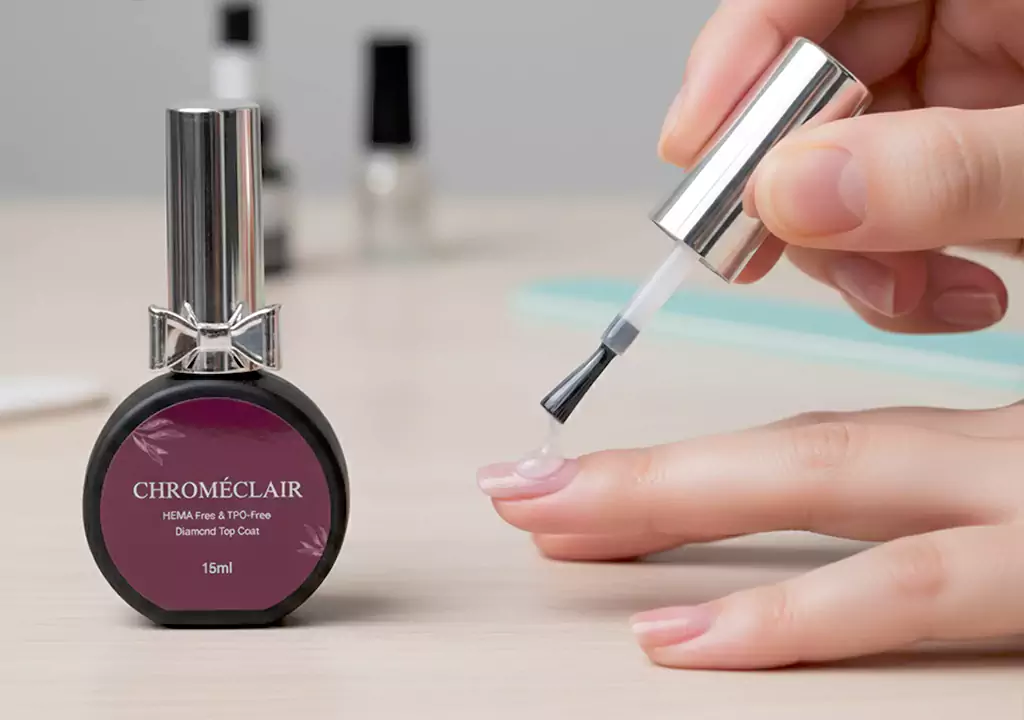
Basislaag vs. Toplaag: De belangrijkste verschillen
Hoewel ze er in het flesje misschien hetzelfde uitzien, zijn een basecoat en een topcoat ontwikkeld voor totaal verschillende doeleinden. Hier is een korte vergelijking:
| Functie | Basislaag | Toplaag |
|---|---|---|
| Doel | Bereidt nagels voor, voorkomt vlekken, bevordert hechting | Verzegelt kleur, voegt glans toe, beschermt tegen spanen |
| Aanvraagvolgorde | Ten eerste, voor gekleurd poetsmiddel | Als laatste, na gekleurd poetsmiddel |
| Formule | Licht kleverig, flexibel, vaak met versterkende ingrediënten | Harde, duurzame, glanzende of matte afwerking |
| Zichtbaarheid | Helder of licht getint, niet zichtbaar nadat kleur is aangebracht | Helder, zichtbaar als de laatste glanzende laag |
| Levenslange uitkering | Verlengt slijtage door verbeterde hechting | Verlengt de levensduur door een beschermend schild |
Kun je een topcoat als basecoat gebruiken (of andersom)?
Kort antwoord: geen — en dit is waarom het belangrijk is.
Hoewel ze er in het flesje hetzelfde uitzien, zijn base coats en top coats totaal verschillende formules met totaal verschillende toepassingen:
- Basislaag is flexibel en klevend door zijn ontwerp, ontworpen om zich aan de nagelplaat te hechten en de nagellak iets te geven om zich aan vast te klampen.
- Toplaag is hard en glad door zijn ontwerp, ontworpen om een sterke beschermende laag te vormen over uitgehard polijstmiddel.
Als je ze verwisselt, gaat het in een mum van tijd mis. Als je je top coat als een base coat aanbrengt, kan je nagellak zich nergens aan hechten en zal het onmiddellijk vervellen. Als je je base coat als top coat aanbrengt, heeft je manicure geen enkele bescherming.
Als je een tweestaps proces te ingewikkeld vindt, is een 2-in-1 basis- en topcoat een acceptabel alternatief, hoewel je er rekening mee moet houden dat het een compromis is en niet helemaal hetzelfde effect zal hebben.
Base Coat en Top Coat op de juiste manier aanbrengen
Je Base Coat aanbrengen:
- Begin met schone, droge nagels en zorg ervoor dat er geen olie, lotion of oude nagellak op je nagels zit.
- Vijl je nagels in de gewenste vorm en polijst het oppervlak.
- Gebruik één laag base coat, begin bij de nagelriem en werk zo naar het uiteinde van de nagel toe, waarbij je ook de zijkanten bedekt.
- Wacht 2 minuten voordat je verder gaat met de volgende stap.
Je toplaag aanbrengen:
- Zorg er echter wel voor dat de gekleurde nagellak volledig droog is voordat je met het proces begint.
- Breng een dunne en gelijkmatige laag top coat aan vanaf de nagelriem tot aan het uiteinde van de nagel.
- Door de 'afdeklaag'-techniek te gebruiken, waarbij je met het penseel lichtjes over de nagelpunt strijkt, kun je voorkomen dat de vrije nagelrand afbrokkelt.
- Laat de top coat volledig drogen voordat je een tweede laag aanbrengt als je een langduriger resultaat wilt.
- Breng elke 2-3 dagen een nieuw laagje top coat aan om de glans te behouden en de verzegeling sterk te houden.
De complete manicuresequentie:
Grondlaag → wacht 2 min → eerste kleurlaag → wacht 2 min → tweede kleurlaag → wacht 2 min → toplaag → volledig laten drogen ✅
Hoe kies je de juiste Base Coat en Top Coat?
Met zoveel opties op de markt is het handig om te weten wat je precies zoekt:
- Stem het product af op je behoeften. Heb je ribbels? Dan is een nokvullende basislaag de juiste keuze. Altijd onderweg? Dan is een sneldrogende topcoat precies wat je nodig hebt om je een hoop verdriet te besparen. Wil je een niet-glanzende afwerking? Dan is een matte topcoat precies wat je nodig hebt voor een strakke, vlakke afwerking zonder dat je daar extra werk voor nodig hebt.
- Controleer de ingrediënten. Schone schoonheid is net zo belangrijk voor nagelverzorging als voor elk ander onderdeel van je schoonheidsroutine. Zoek naar producten die vrij zijn van schadelijke chemicaliën zoals formaldehyde, DBP (dibutylftalaat) en kamfer. Chroméclair biedt veganistische en wreedheidsvrije formules die ook vrij zijn van HEMA en TPO, zodat je gerust kunt zijn dat je het best mogelijke product op je nagels aanbrengt.
- Controleer of het compatibel is met je systeem. Als je een gellak gebruikt, zorg er dan voor dat je basis- en topcoat ontworpen zijn voor gebruik in een gelsysteem.
Veelgestelde vragen
V: Wat is belangrijker - de base coat of de top coat?
Ze zijn even belangrijk. Zie het als het bouwen van een huis. De basislaag is het fundament en de toplaag is het dak. Als je het fundament of het dak weghaalt, wordt het hele huis instabiel. Voor een langdurige en mooie manicure heb je echt beide nodig.
V: Kan ik alleen een basislaag dragen, zonder kleur?
Ja, absoluut. Het dragen van een basecoat op zich geeft je nagels een mooie, natuurlijke glans en een basisniveau van bescherming voor dagelijks gebruik. Het is een ideale keuze voor iedereen die een afgewerkte, gepolijste look wil zonder een gekleurde lak te hoeven gebruiken.
V: Hoeveel lagen heb ik eigenlijk nodig?
De gouden regel: 1 basislaag, 2 dunne laagjes kleur, 1-2 dunne laagjes topcoat. Het is altijd het beste om dunne lagen te gebruiken, omdat die sneller drogen, langer meegaan en er beter uitzien dan dikke lagen.
V: Wat gebeurt er als ik de basislaag helemaal oversla?
Er kunnen een paar dingen misgaan. De felle pigmenten kunnen vlekken maken op je natuurlijke nagel, de nagellak hecht niet zo goed aan de nagel en de manicure begint veel eerder te chippen dan verwacht. Het proces duurt minder dan een minuut en is altijd de moeite waard.
De kern van de zaak
Jouw basislaag en toplaag zijn geen toevoegingen, maar maken het verschil tussen een manicure die lang houdt en een die de volgende ochtend weer afbladdert. Base coat wordt gebruikt om voor te bereiden, te beschermen en de hechting te bevorderen. Top coat wordt gebruikt om te verzegelen, te laten glanzen en te beschermen. Dit zijn de twee hulpmiddelen die het raamwerk vormen voor je hele manicure.
Dus, de volgende keer dat je in de verleiding komt om meteen de nagellak te pakken en aan de slag te gaan, doe het dan niet. Neem de twee minuten aan beide kanten. Je nagels zullen je dankbaar zijn, en jij ook, dinsdagochtend.
 English
  Spanish
  German
  French
  Italian
  Dutch
Dutch