
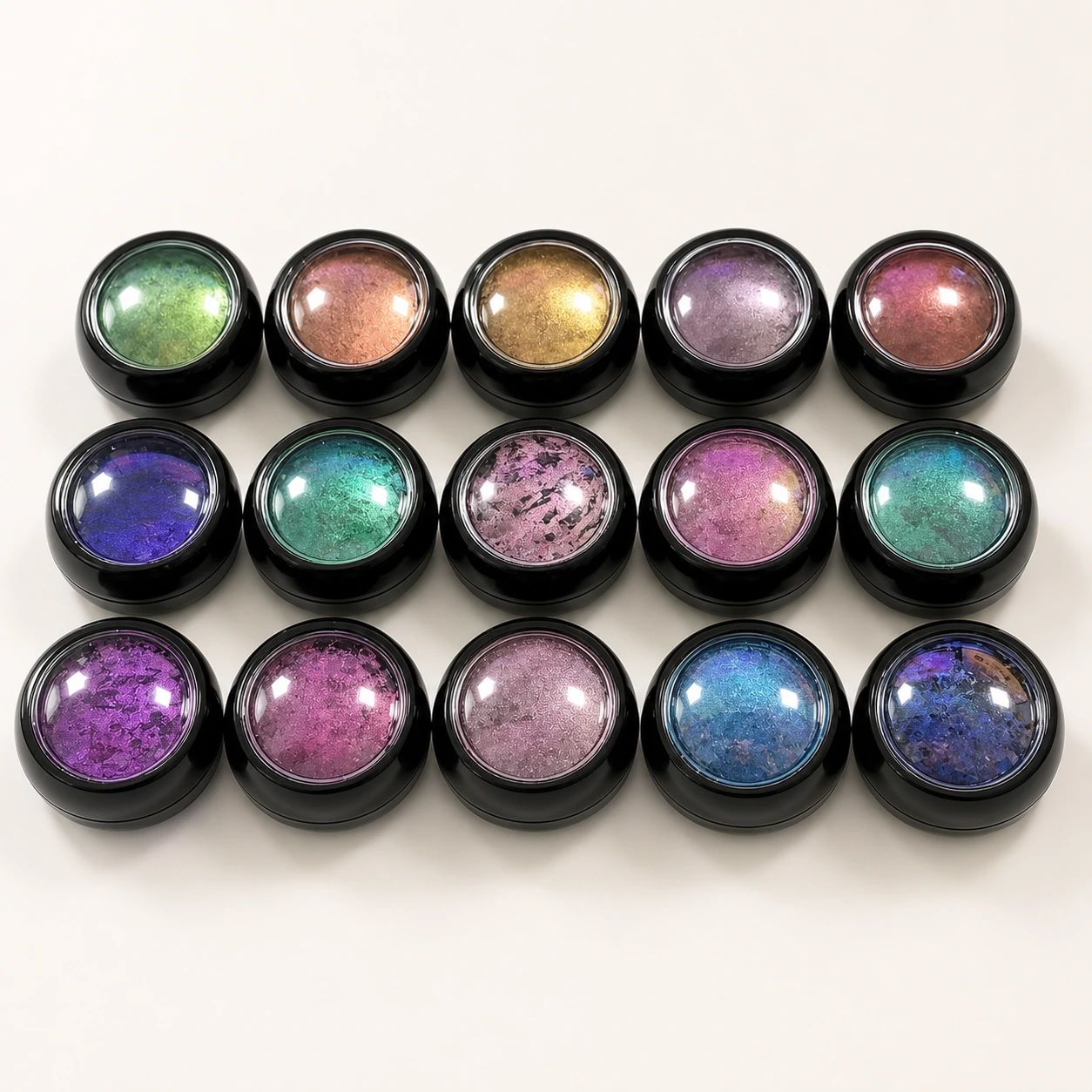
There is no universal powder-to-gel ratio for magnetic nail powder. Start with a very small test batch, mix thoroughly, check the movement with a magnet and add powder in tiny increments. The correct amount is the lowest concentration that produces the reflection you want while the gel still applies in a thin, even layer and cures completely.
Powder density, particle size, gel viscosity, base color, lamp and desired finish all change the result. A fixed spoon measurement can be misleading, so visual testing is safer and more repeatable than filling a bottle by guesswork.
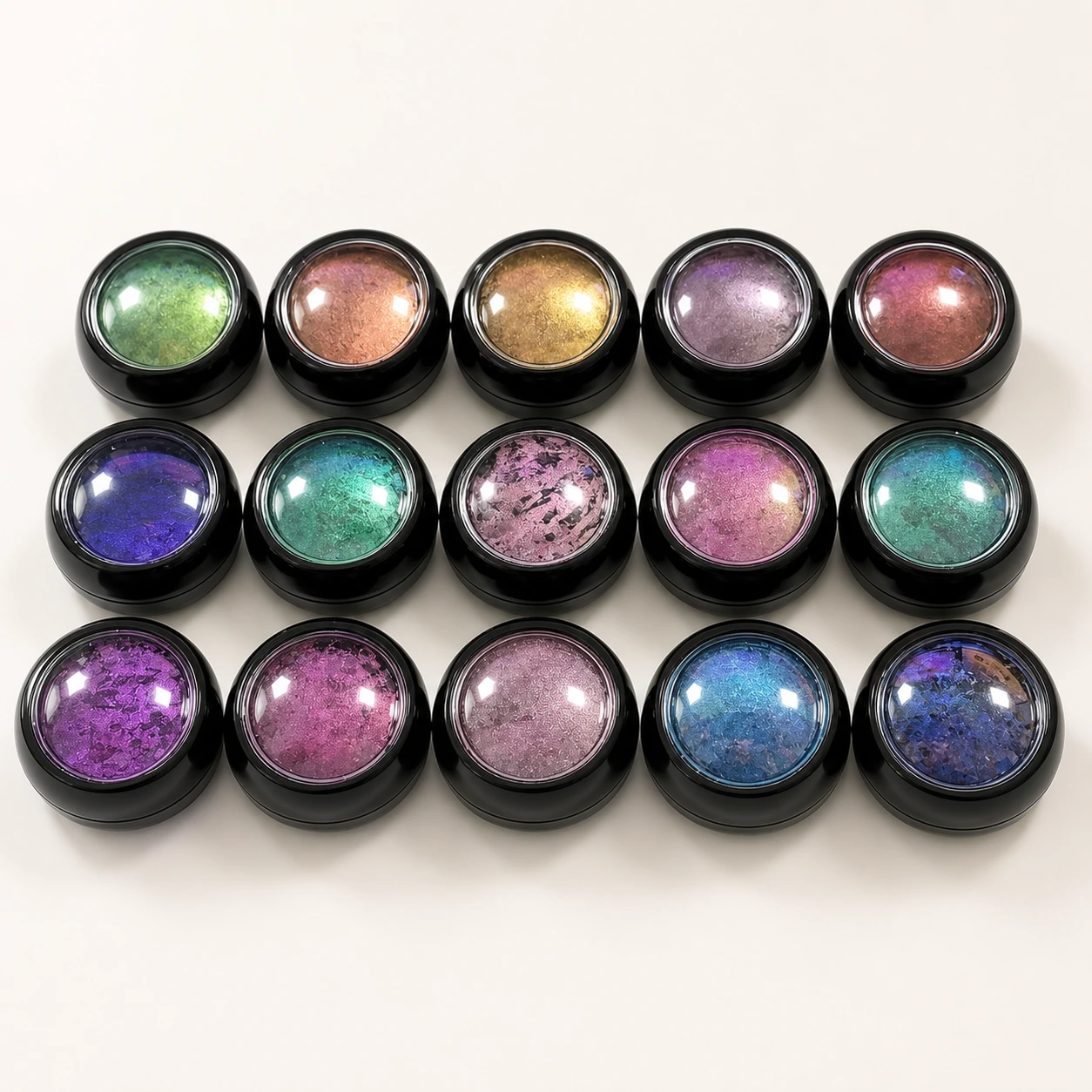
Test 15 different magnetic shades for $89.
The complete collection includes ES-C01–ES-C15 and a magnet; gel and lamp are not included.
A Practical Starting Method
- Place about five drops of compatible gel on a clean, non-porous palette. This is a test batch, not a permanent formula.
- Pick up only a light dusting of powder on the tip of a clean, dry spatula. Do not begin with a heaped scoop.
- Fold the powder into the gel slowly until no dry particles remain. Avoid whipping air into the mixture.
- Apply a thin layer to a swatch stick and hold the magnet near the uncured gel.
- If the reflection is too weak, add another tiny dusting. Repeat one small addition at a time.
- Cure the swatch using the gel manufacturer’s lamp and timing, then check hardness, smoothness and adhesion.
Record the gel, shade, number of small additions and base color after a successful test. This turns a visual method into a repeatable salon formula without pretending that one ratio works for every product.
How Much Powder for Soft, Velvet and Galaxy Effects?
| Target look | What to aim for while mixing | Stop adding powder when… |
|---|---|---|
| Soft shimmer | The mixture remains mostly transparent and the magnet creates a delicate moving veil | You can see a gentle reflection without visible dry specks |
| Velvet effect | Particles move across the full nail and form an even luminous field | The surface stays level and responds quickly to the magnet |
| Sharp cat-eye line | The reflection gathers into a defined band at your working distance | The line is clear before the mixture becomes thick |
| Galaxy flash | A stronger concentration creates high contrast over a dark base | Another addition would reduce leveling or make curing uncertain |
Why One Exact Ratio Does Not Work
Powders Have Different Particle Loads
Two powders that occupy the same apparent volume may not contain the same mass or particle distribution. A fluffy powder and a dense powder can produce very different concentrations from the same scoop.
Paso siguiente recomendado
Create Your Own Magnetic Gel Effect
Magnetic powder lets you vary the reflective effect yourself. Mix it with a compatible solid color, base gel, or top gel, shape the uncured layer with a magnet, then cure it under a UV/LED nail lamp.
- Choose one of the 15 ES-C magnetic powders.
- Mix a small amount into solid color, base gel, or top gel and adjust until the reflection looks right to you.
- Shape the uncured gel with a magnet, cure under a UV/LED nail lamp, and finish the service as required.
Get the 15-color magnetic powder setBrowse all 15 magnetic powdersComparar todas las rutinas
Gels Have Different Viscosities
A thin clear gel allows particles to move differently from a thick builder-style gel. Very thick gel may hold the powder in place before the magnet forms a line; very thin gel may let the design spread before curing. Use only gels intended for the layer you are creating.
Base Color Changes Perceived Strength
A small amount of magnetic powder can look dramatic over black because the contrast is high. The same mixture may look softer over clear or nude gel. Test the intended base instead of judging only the wet mixture on a palette.
Should You Mix Powder Into Base, Color or Top Gel?
- Clear or base gel: useful for a transparent magnetic veil, provided the product is intended for that application layer.
- Color gel: creates a built-in background color and can make duochrome shifts more complex.
- Top gel: can create a clear magnetic layer over color, but it still needs a final surface that meets the top gel’s instructions. Do not assume every top gel is suitable for pigment mixing.
Stay within one compatible gel system whenever possible. Do not mix regular air-dry nail polish with gel. Never return a custom mixture to the original bottle, because contamination and an unknown powder level can change the remaining product.
Signs You Added Too Much Magnetic Powder
- The mixture becomes grainy, lumpy or difficult to level.
- Brush marks remain after application.
- The gel has to be applied in a thick layer to cover evenly.
- The cured swatch feels soft, wrinkles or remains unstable.
- The magnetic line is not sharper even after more powder is added.
If any of these appear, discard the test batch and start again with less powder. Do not try to rescue an overloaded mixture by applying it thickly.
Curing and Safety Checks
Keep uncured gel and loose powder away from skin and eyes, work in a clean area, control airborne dust and follow the safety information for both products. A successful-looking surface does not prove full cure. Always use the lamp and cure time specified for the gel, make a swatch first and stop using any mixture that wrinkles, stays soft or causes irritation.
For the full application sequence, read how to mix magnetic powder with gel polish. If you prefer a ready-balanced bottle, compare ready-made cat eye gel polish.
The Short Answer
Use less powder than you think you need, build the concentration gradually and stop as soon as the magnetic reflection is strong enough. Thin application, full cure and a recorded test formula matter more than a universal scoop ratio.
Test the Method Across 15 Magnetic Shades
ES-C01–ES-C15 complete collection · $89 · magnet included
 English
  Spanish
  German
  French
  Italian
  Dutch
Dutch