

You may wonder if you should cure your gel polish a little longer, just to be safe. Many beginners feel confused when the polish seems hard but still has a tacky layer. This confusion often leads you to overcure gel polish.
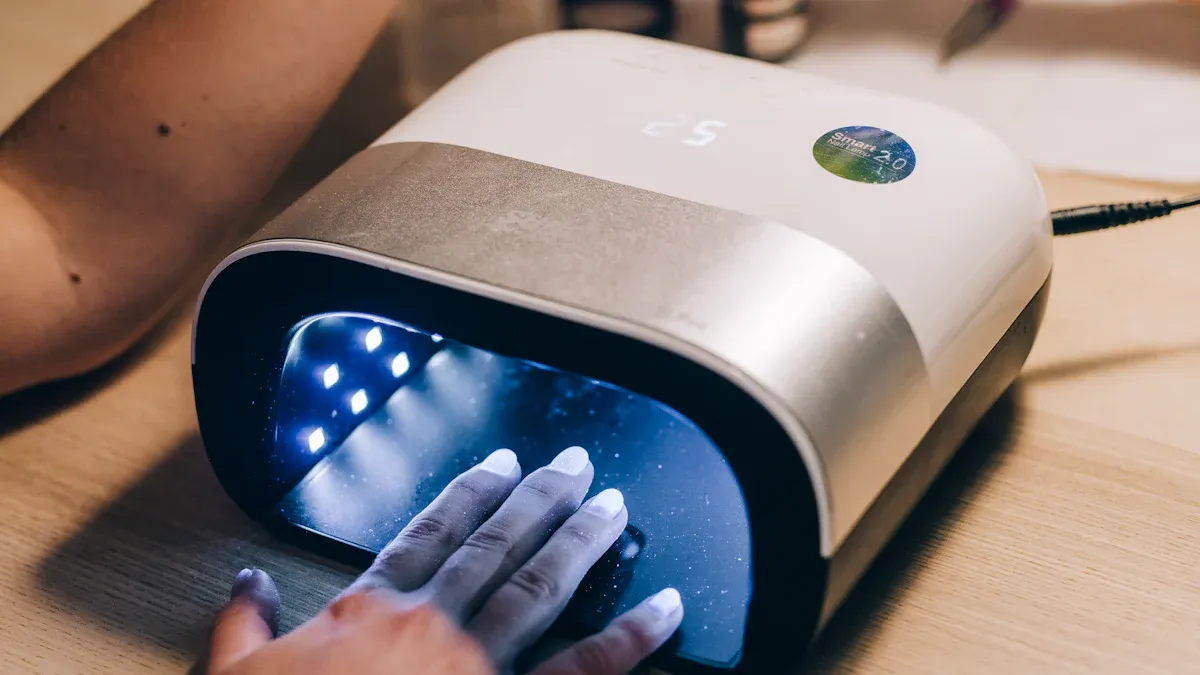
Dr. Deirdre Buckley warns that allergic reactions can cause rashes and nail loosening, so you need to cure gel polish correctly.
- Many people think the sticky surface means the polish is not dry, but this is normal during the curing process.
Learning the right way helps you avoid mistakes and keeps your nails healthy.
Key Takeaways
- Curing gel polish correctly is crucial. Overcuring can make nails brittle and lead to cracks or chips.
- Always follow the manufacturer’s instructions for curing times. This helps avoid common mistakes and keeps your nails healthy.
- Use the right lamp for your gel polish. Ensure it has the correct wattage to prevent overcuring.
- Apply thin layers of gel polish. This allows for even curing and reduces the risk of brittleness.
- Be patient and trust the process. Avoid adding extra curing time, as it can harm your nails.
What Is Overcure Gel Polish?
Definition and Process
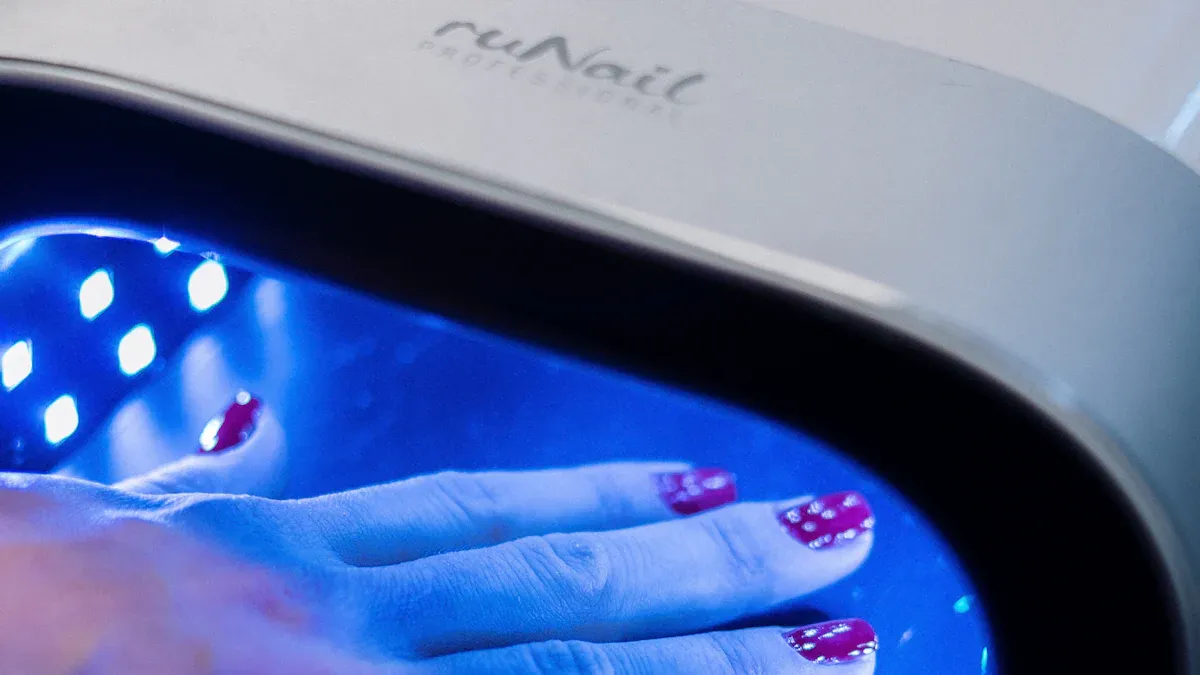
When you use gel polish, you need to cure it under a special lamp. This process helps the polish harden and stick to your nails. If you overcure gel polish, you expose it to the lamp for longer than needed. Many beginners think more time means better results, but this is not true. Overcuring happens when the gel reaches a point where extra curing does not help. Instead, it can cause problems for your nails.
Note: Curing depends on more than just the lamp’s wattage. You must also consider the type of gel and the lamp’s wavelength. If you misunderstand these factors, you may not cure the polish properly, which can lead to nail issues.
Overcuring vs. Proper Curing
You might wonder why proper curing is so important. When you cure gel polish the right way, you get a smooth, strong finish. The polish stays flexible and lasts longer. If you overcure gel polish, you risk making the polish brittle. This can cause cracks, chips, or even discoloration. Overcured polish also becomes harder to remove.
Here are some key differences:
- Proper curing gives you a durable, shiny finish.
- Overcuring can make the polish brittle and difficult to remove.
- Improper curing, including overcuring, may lead to cracking, lifting, or yellowing.
You need to follow the correct curing time for each layer. Different gel polish formulas react in their own way. If you do not use the right timing, you may lose the durability and appearance you want. Precise curing times help you avoid these problems and keep your nails looking their best.
Why Beginners Overcure Gel Polish
Incorrect Lamp Use
Sometimes, you pick the wrong lamp for gel polish. Many beginners do not know about lamp wattage or wavelength. You might think any lamp will work fine. Using a lamp that does not match your gel polish can cause overcuring. The polish may get too hard or brittle. It is important to learn how lamps change the curing process. Knowing about lamp settings helps you stop these problems.
Tip: Ezmio Education has guides that teach you about gel polish and how to use lamps the right way.
Not Following Instructions
You may forget to read the instructions with your gel polish. This is a mistake many beginners make. Every gel polish needs its own curing time and method. If you skip the instructions, you might overcure your gel polish. The blog says chemical reactions during curing can cause trouble if you do not use the right steps. Always read and follow the directions for the best results.
- Knowing how products work helps you avoid mistakes.
- Learning the right way to use gel polish lowers the risk of overcuring.
Overcompensating for Under-curing
You might worry your gel polish is not cured enough. This makes you cure it longer than needed. Many beginners think more time makes polish stronger. But overcuring can hurt your nails. The article about gel allergies says you need good products and the right steps. Trust the process and use the curing time that is recommended. This keeps you safe from problems caused by overcuring.
- Learning proper curing methods can help you avoid mistakes.
- Training resources show you how to tell when your polish is cured.
If you know these reasons, you can avoid common mistakes. This helps keep your nails healthy.
Effects of Overcure Gel Polish
If you overcure gel polish, your nails get too much UV or LED light. This can cause problems for both your nails and the polish. Knowing these effects shows why you should cure gel polish the right way.
Brittle Nails and Chips
Overcuring makes gel polish very hard. When polish is too hard, it cannot bend with your nail. This causes cracks and chips. Your nails may feel weak and break more often. The polish might lift or peel at the edges. These things happen because the polish does not stick well anymore.
- Overcuring makes polish hard and weakens its hold.
- Nails get brittle and crack more easily.
- Gel polish can lift or peel at the edges.
You can see these problems in studies. The table below lists some common effects:
| Adverse Effect | Description |
|---|---|
| Brittle Nails | Too much UV or LED light makes gel polish very hard and brittle. This can cause nails to crack and break. |
| Lifting and Peeling | Overcuring makes polish lose its grip and flexibility. This can cause lifting or peeling, mostly at the edges. |
| Discoloration | Too much UV or LED light can change the color of gel polish. This can make nails look dull or uneven. |
Heat and Exothermic Reaction
You might feel heat during curing. This happens because the gel polish hardens with a chemical reaction that gives off heat. If you put on thick gel or use certain types, it gets hotter. Overcuring makes this worse and can hurt your nails.
- Thick gel or some types cure fast and get hot.
- The curing reaction gives off heat.
- Use thin layers to stop heat spikes.
- Flash curing or low heat modes can help control heat.
If your nails burn, you may be overcuring or using too much gel.
Yellowing and Removal Issues
Overcuring can turn gel polish yellow or make it hard to take off. Too much UV or LED light can cause changes in the polish and your nail. This can make the color look uneven or yellow. Pigments in the polish can move into your nail, especially if your nails are dry or damaged. This causes yellow spots or color changes.
- UV/LED light can make reactive oxygen species that change your nails.
- Pigments can move into dry or weak nails and cause stains.
- Leftover chemicals can trap yellow stuff and make removal harder.
Overcured gel polish can form a tough layer that is hard to soak off. This makes removal take longer and can hurt your nails if you try to force it.
Note: Overcure gel polish does not just look bad. It also makes nail care harder later.
If you know these effects, you will see why you should not overcure gel polish. Always follow the right steps for healthy nails.
Prevent Overcure Gel Polish
Follow Manufacturer Guidelines
You can avoid many problems by following the instructions that come with your gel polish. Manufacturers test their products to find the best curing times and methods. When you use the recommended steps, you lower the risk of overcure gel polish. You get a shiny, durable finish and reduce brittleness or discoloration. Many users find that following these guidelines leads to better results and fewer mistakes.
Tip: Always check the instructions before you start. This helps you know how long to cure each layer and which lamp works best.
- Following the right steps keeps your nails healthy.
- You avoid common mistakes like curing for too long or using the wrong lamp.
Use Suitable Lamp Settings
Choosing the right lamp is important for proper curing. Experts suggest using LED lamps with at least 36 watts, or UV lamps with a minimum of 36 watts. Some salons use higher wattages for faster results, but you should match the lamp to your gel polish. Lamps with low power can leave polish soft or tacky, while high power can cause overcure gel polish. Keeping your lamp bulbs or LEDs in good condition also helps you get consistent results.
| Lamp Type | Recommended Wattage | Why It Matters |
|---|---|---|
| LED | 36-48 watts | Prevents under or overcuring |
| UV | 36-54 watts | Ensures even curing |
- Use the lamp that matches your gel polish.
- Check your lamp’s wattage before each use.
Set Proper Curing Time
Setting the right curing time helps you avoid overcuring. Beginners often make mistakes by curing for too long or not long enough. You should clean your nails before applying gel polish. Apply thin layers and cure each one for the time listed in the instructions. Thick layers or skipping nail prep can cause lifting, chipping, or uneven curing.
Remember: Adding extra curing time does not make your manicure stronger. It can lead to brittle nails and discoloration.
- Clean your nails before you start.
- Apply thin layers and cure each for the recommended time.
- Watch the clock and avoid adding extra time.
By following these steps, you prevent overcure gel polish and keep your nails looking their best.
You might overcure gel polish for a few reasons. Sometimes, you use an old lamp. Thick layers of polish can also cause problems. Your hand may not be in the right spot.
- Using a random curing unit
- Putting on color too thick
- Not curing your gel nails enough
- Hand in the wrong position
- Using a lamp older than 3 years
Over-curing happens if the lamp is too strong or does not match the gel. This makes the polish react too fast and get weak.
You can make your manicure better by following each step. Keep your layers thin and use good products. Be patient and pay attention. Learning these habits helps you get healthy nails that last longer.
FAQ
Why does gel polish need a specific curing time?
Gel polish needs a set curing time because the chemicals react best in that window. If you cure too long, you risk brittle nails. If you cure too short, the polish stays soft.
Why do my nails feel hot during curing?
You feel heat because the gel polish creates an exothermic reaction. Thick layers trap more heat. Use thin coats to lower the chance of burning.
Why does overcuring make gel polish hard to remove?
Overcuring forms a tough layer that resists soaking. You spend more time removing it, which can damage your nails. Stick to the recommended curing time for easy removal.
Why does overcured gel polish turn yellow?
Too much UV or LED light changes the polish color. Pigments break down and cause yellowing. You keep your nails bright by following the correct curing time.
Why do beginners often overcure gel polish?
Beginners often worry about under-curing. You may add extra time to be safe. This leads to overcuring and nail problems. Trust the instructions for best results.
 English
  Spanish
  German
  French
  Italian
  Dutch
Dutch