
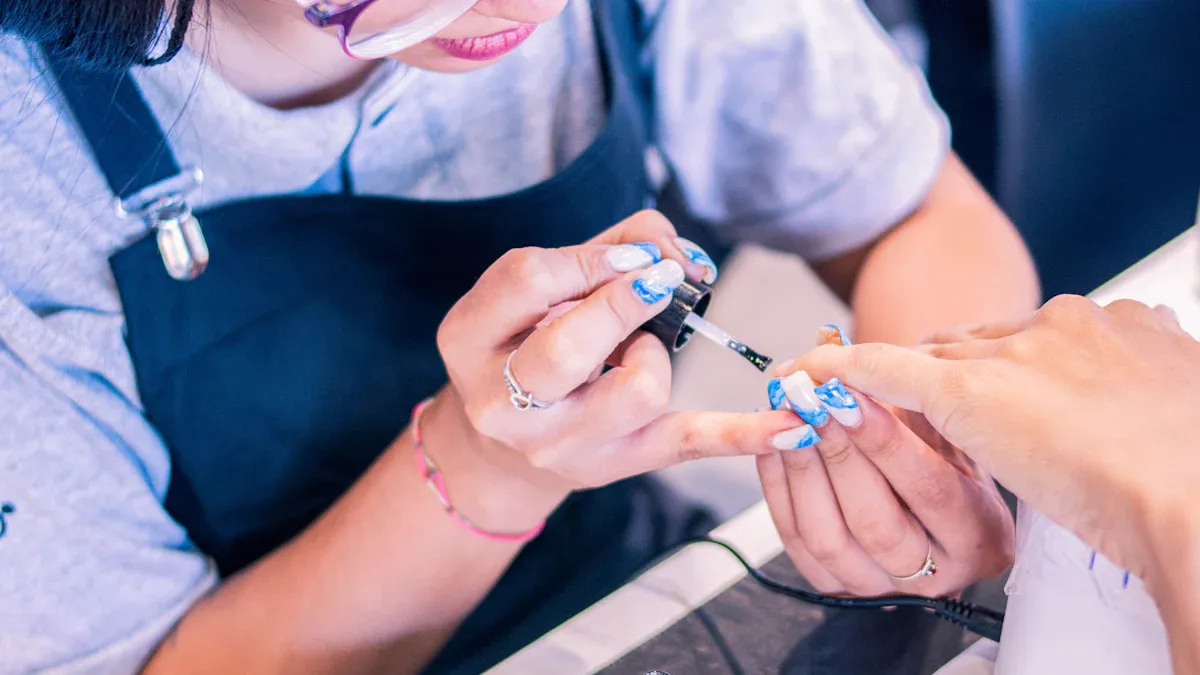
Gel nails are created with the help of a particular gel that becomes hard after being exposed to a UV or LED lamp. Gel nails enhancement will give you longer nails while gel nail mani provides a colorful appearance. The majority of people love gel nails because they tend to last long and have shiny looks. What is more important, they are dried quite quickly. However, the drawbacks include higher expenses, possible damage to one’s real nails, and harmful effects of UV rays on one’s health.
| Pros of Gel Nails | Cons of Gel Nails |
|---|---|
| Lasts a long time and is shiny | Costs more than regular nail polish |
| Dries very fast | Can hurt your real nails when put on |
| Very strong | UV light can be bad for your health |
Key Takeaways
- The nail polish stays shiny for a considerable period of time. It will not peel off within several days but up to 4 weeks.
- The choice for the gel nail enhancement is possible either when you want strong and durable nail extensions. Or else, you can have the manicure procedure done.
- Pay attention to potential nail damage and possible skin infections. Take breaks while wearing gel nails and let your nails rest from it.
- The removal process should be performed correctly because it requires soaking nails in acetone. Then apply the cuticle oil.
- Consider the cost and maintenance required to have gel nails. They must be renewed in 2-3 weeks.
What Are Gel Nails

Gel Nail Enhancement vs Gel Manicure
In a salon, the client is able to choose either gel nail enhancements or gel manicures. In gel nail enhancements, hard gels are used to create length and shape on natural nails. This creates very strong and long nails which last for weeks. On the other hand, gel manicures involve soft gel polishes being applied on natural nails to create color and shine. The only thing is that natural nail length is maintained.
- Gel nail enhancements give you:
- Extra strength and durability
- Special shapes and longer nails
- Results that can last a month or more with good care
- Gel manicures offer:
- Flexible, lighter feel
- Easy color changes
- Lasts about 2–3 weeks
Tip: If you want strong, long nails, try gel nail enhancements. If you want a simple, long-lasting color, choose a gel manicure.
Types of Gel Nails (Hard vs. Soft)
There is also a choice between hard and soft gel. Hard gel is strong and does not require soaking for removal. You have to file it away to take it off. Soft gel, which is often applied for gel manicure purposes, needs to be soaked in acetone for removal.
- Soak-off: This approach helps to remove soft gel from your nails.
- Fill: Involves removing the surface gel and color and applying the new layer of gel.
- Rebalance: It includes reshaping and restructuring your nails.
How Gel Nails Are Applied
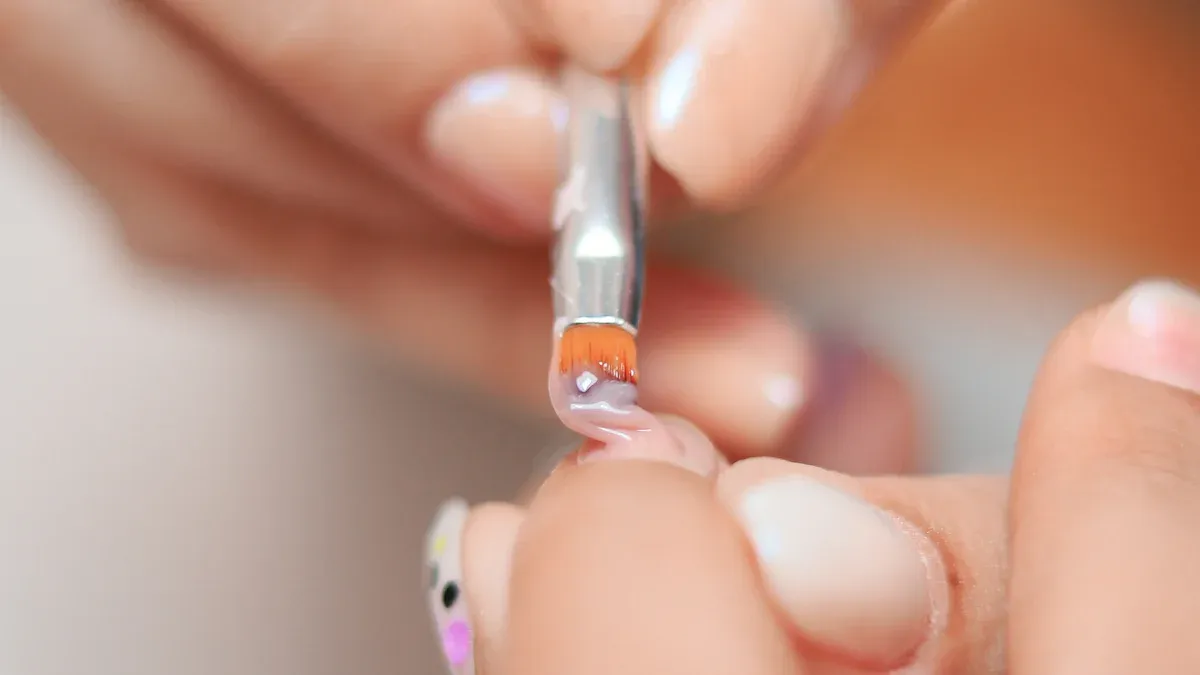
In this nail treatment, a specialized formula made of resins is used. The major distinction between this polish and the usual polish is that the former uses photo initiators, which react to light and cure the polish. Once you opt for gel nails, the gel is applied to your nails using light therapy.
Recommended next step
HEMA/TPO-Free Starter Routine
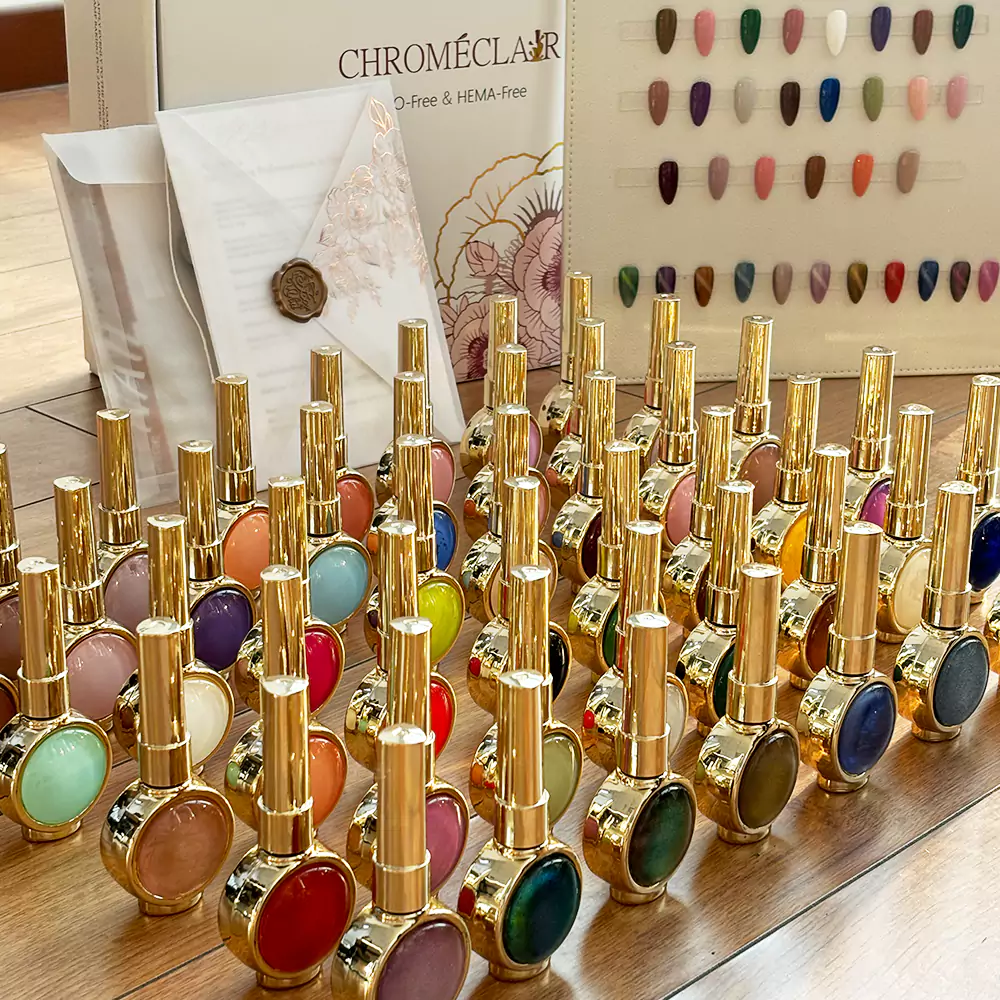
First time trying CHROMÉCLAIR? Start with a small, compatible routine instead of one random bottle.
- Choose a HEMA/TPO-free color or set.
- Pair it with a compatible base and top coat.
- Use the same system for a smoother first manicure.
Shop starter routine kitStart with UV1 7PCSCompare all routines
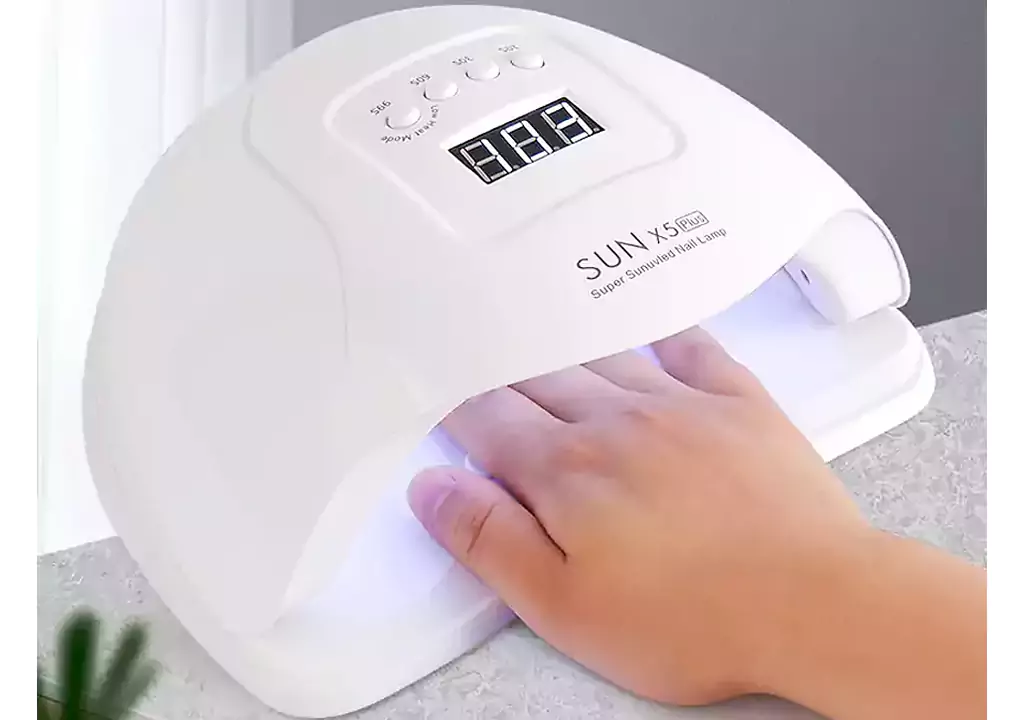
| Lamp Type | Average Curing Time |
|---|---|
| LED | 30–60 seconds |
| UV | 2–3 minutes |
The gel polish will undergo a process known as polymerization when it comes into contact with the light bulb. In the process, a very durable coat is formed which sticks very well onto your nails. The regular polish only evaporates and cannot retain its color for long.
Pros of Gel Nails
Long-Lasting Results
Gel nails ensure that your nails remain strong. The process allows your nails to retain their shape for a long period of time. Therefore, there is no need to fear chipping and flaking. The effects of gel nails will last far longer than those provided by the regular nail polish. According to research findings, gel nails have the potential to remain in their best condition up to four weeks.
- Gel nails can last four weeks without chipping or damage.
- Regular nail polish chips easily and does not last as long.
Tip: Gel nails are a good choice if you want fresh-looking nails for a long time.
Glossy Finish
The gel nail polish offers your nails with an excellent glossiness and smoothness. It ensures that you have shinny nails. Your nails will be colored without fading easily. Gel nail polish makes your nails look neat and professional. This nail polish makes sure that any unevenness on your nails will be concealed. Gel nail polish is ideal for beautifying your nails.
- Gel nail polish enhances the appearance of both even and uneven nails.
- Gel nail polish makes your nails appear shiny and smooth.
- Gel nail polish hides any irregularities in your nails.
Chip Resistance
Nails created using gel technology do not peel or scratch. Gel becomes hardened with the help of UV or LED lamp. They are perfect for day-to-day activities since one does not need to take care of their nails. That is why this nail treatment option is chosen by many people for trips.
Versatile Designs
Nail gels give you a chance to explore various options for designing your nails. You can pick either simple colors or elaborate designs which haven’t ever been attempted before. The latest generation of gel polishes are green and contain no chemicals. Thus, their use is safe both for you and for nature. They provide brighter and more durable colors. Social media can help in finding new designs.
- Eco-friendly and non-toxic gels are the latest rage for beauty enthusiasts.
- The use of technology ensures strength of nails and brightness of color.
- Social media allows you to discover unique nail designs.
Point to remember: Unlike acrylic nails, gel nails do not damage natural nails. It is reported that women develop longer and stronger nails when applying builder gel regularly.
Cons of Gel Nails
Nail Damage Risk
Your nails may experience alterations following nail gel application. Numerous studies confirm that many individuals suffer from weakened nails once they try to remove gel nail polish. For example:
- 74.1% of respondents experienced some alteration in their nails after gel polish removal.
- 30.3% noticed weaker nails compared to before applying polish.
- 24.7% had nails splitting after removal.
- 8.5% observed white spots in their nails.
Weakness and peeling could also be observed. The more an individual tried to peel off gel polish manually, the more damage he or she caused. In addition, allergic reactions and rashes could appear owing to the presence of some ingredients in the polish.
Tip: Let your nails rest between gel nail sets so they can heal.
Removal Challenges
Removing gel nails is not an easy task. It requires that one soaks his/her nails in acetone or uses special removers. This process takes much time, and some people find it rather harsh. Hurrying during removing and pulling nails too roughly may damage them or even harm the skin. Among others, people mention such disadvantages:
- Quality removers are rather expensive.
- Other nail care products (acetone free removers) compete with gel removers.
- It is difficult to find suitable chemicals for removing.
Your nails could benefit from the following tips:
- Place cotton pads soaked in acetone on your nails, and cover them with aluminum foil for about 10 to 15 minutes.
- Apply Vaseline on the cuticles before soaking.
- Apply cuticle oil after removing the gel nails to nourish them.
- Use non-acetone products or warm oil for sensitive skin.
- Once the nails are removed, apply cuticle oil twice daily and hand moisturizer.
Note: Soft removal of gel nails protects your nails and skin from damage.
Cost and Upkeep
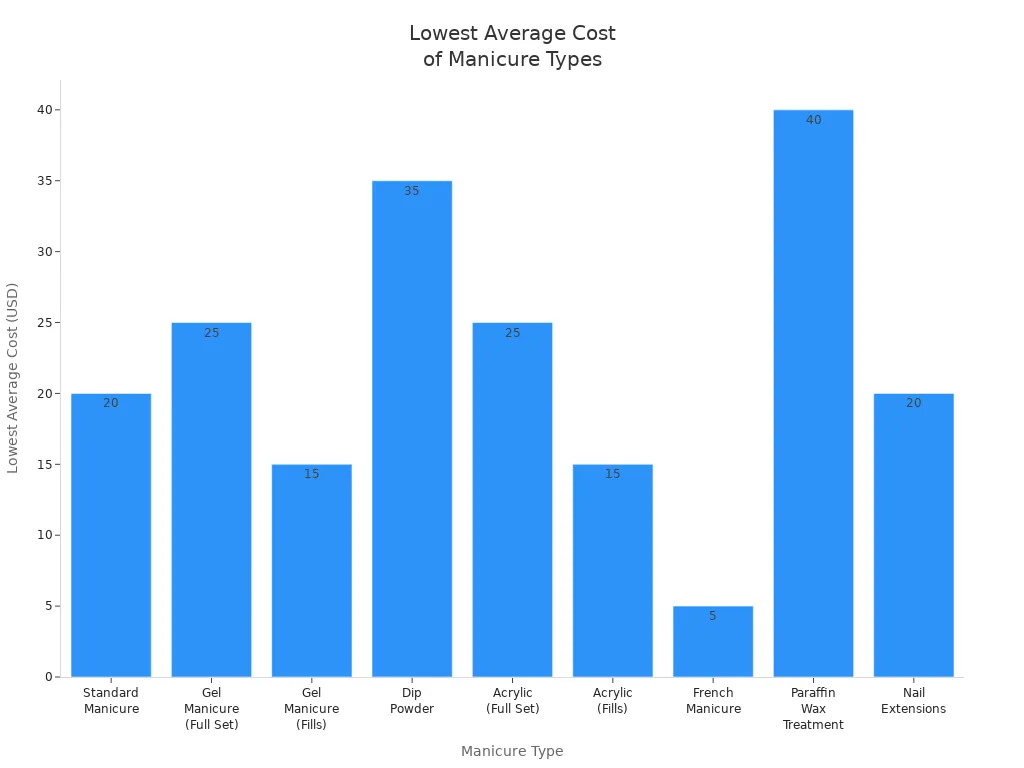
Gel nails cost more than regular manicures. You pay for putting them on, taking them off, and fixing them. Prices change depending on where you live and which salon you go to. In big cities, gel manicures usually start at $30 and can go up to $50 or more. In smaller towns, they cost about $15 to $25. You need to get your nails fixed every 2–3 weeks to keep them looking good.
| Manicure Type | Average Cost Range |
|---|---|
| Standard Manicure | $20 – $40 |
| Gel Manicure (Full Set) | $25 – $65 |
| Gel Manicure (Fills) | $15 – $20 |
| Dip Powder | $35 – $50 |
| Acrylic (Full Set) | $25 – $120 |
| Acrylic (Fills) | $15 – $20 |
| French Manicure | $5 – $15 |
| Paraffin Wax Treatment | +$40 |
| Nail Extensions | $20 – $35 |
| Source | Maintenance Frequency |
|---|---|
| Erica Sata | Every 2-3 weeks |
| Dollanails Pro | Every 2-3 weeks |
| Glam Squad | Roughly every 2 weeks |
You need to save money for fills and touch-ups. Gel nails take more time and money than regular polish.
UV/LED Exposure
Your hands get UV or LED light during gel nail treatments. Doctors say using nail lamps for a long time can be risky.
| Evidence Type | Description |
|---|---|
| Case Reports | Some people got skin cancer after using nail lamps often. |
| Skin Conditions | Some skin problems have been linked to UV nail lamps. |
| Systemic Conditions | People with lupus got new skin spots after lots of UV from gel nails. |
| Safety Concerns | Some nail lamps give off too much radiation in less than 10 minutes. |
| Risk Reduction | Experts say to wear gloves and sunscreen to protect your skin. |
The dangers may be reduced by using gloves and/or applying sunscreen on your hands. It is better to avoid frequent use of nail lamps or choose salons using safer lamps.
Alert: UV rays may cause various issues in the skin. Protect your hands while doing gel nails.
Consider the environmental aspect as well. Products used for gel nails have chemicals such as toluene, formaldehyde, and DBP. Such substances will contaminate the soil and atmosphere. Curing process consumes energy and produces pollution. Gel nails consist of non-biodegradable substances that are disposed of as waste.
Note: Choosing eco-friendly products saves the environment.
Gel Nails Safety and Nail Health
Common Safety Concerns
With gel nails, there can be various problems related to safety. The major problem faced is that of allergic contact dermatitis, as suggested by dermatologists. In this case, patients can see rashes around their nails. Another problem is that of mechanical nail damage, which can occur from removing gel polish improperly. The use of UV lamps during the process of curing can lead to skin lesions, although skin cancer is rare.
| Safety Concern | Frequency (%) | Number of Cases |
|---|---|---|
| Allergic Contact Dermatitis (ACD) | 70.5 | 62 |
| Mechanical Nail Damage | 26.1 | 23 |
| UV-Induced Skin Lesions | 3.4 | 3 |
Tip: Watch for skin changes or nail weakness after a manicure. If you see problems, talk to a doctor.
Protecting Natural Nails
There are a number of tips on how to maintain the health of your nails. For instance, ensure that your nails are clean and dry before beginning the process. Strip off the old polish from your nails and push your cuticles back gently. File your nails and buff them. Apply a base coat before applying gel polish. Seal your nails to protect them from any damage. Finally, after your manicure, apply cuticle oil and strengthening coat. Use mild removers for gel nails.
- Avoid getting gel nails frequently.
- Apply sunscreen on your hands prior to your session.
- Use gloves that block UV rays when drying.
- Let professionals remove your gel polish.
- Always moisturize your nails and cuticles.
Note: Getting consistent care and help from professionals is more important than taking breaks. Although nails don’t need oxygen, they still need proper care.
When to Avoid Gel Nails
Certain individuals should steer clear of gel nails. People suffering from autoimmune diseases have a higher risk of contracting infections when they undergo flare-ups. Skin sensitivity causes allergic reactions to the gel nail products. Those with blood clotting disorders might find that even small wounds may become serious problems. You should discuss any such medical condition with your physician.
- Those with autoimmune disorders have high infection risks.
- Skin sensitivity makes one prone to allergic reactions.
- Blood clotting disorders turn small wounds serious.
Alert: Before using gel nails, make sure to consult your doctor if you have any health issues.
Gel nails help you get healthy and glossy nails. Gel nails last longer than normal nail polish. You have many options when it comes to gel nail designs. However, gel nails are expensive. They may damage your nails. Consider your nail condition before using gel nails. If you use your hands for various activities, short nails would be preferable.
| Factor | Description |
|---|---|
| Nail Type Assessment | Soft nails may not do well with gel. Hard nails work better. |
| Activity Level Analysis | If you use your hands a lot, keep nails short. |
| Hyperhidrosis Consideration | Sweaty hands can make gel nails not last as long. |
Consider options such as regular polish, gel strips, and dip powder. They work well when you do not wish to use the UV light and harsh chemicals used for gels.
FAQ
Why are gel nails distinct from acrylic nails?
Gel nails use gel, which is set using a UV or LED light. Acrylic nails require a mixture of powder and liquid which cures by itself. Gel nails tend to be lighter.
What do you do if your gel nails begin lifting?
You should not attempt to remove them yourself because you may end up damaging your natural nails. You must visit a professional.
What can be used to protect your skin when applying gel nails?
It would be advisable to wear UV-resistant gloves or put sunscreen on your hands to protect your skin from UV or LED light exposure while your nails are being cured.
How do you know if you have to take a break from gel nails?
If your nails start peeling, get thinner, or develop white spots, it may be time to take a break from applying gel polish.
 English
  Spanish
  German
  French
  Italian
  Dutch
Dutch