
Gel nails can sometimes peel even after you dry gel nail polish. Why does this happen? Most nail experts say you might face peeling because of things like poor nail prep, thick layers, or even an oily nail plate. You could also run into problems if you use low-quality polish or if your nails are damaged. Here are some common reasons:
- Skipping proper cleaning or buffing
- Applying thick coats of gel polish
- Not handling cuticles gently
- Using old or low-quality gel polish
- Having thin, cracked, or oily nails
Don’t worry if this happens to you. These issues are normal and you can fix them with a few easy changes.
Key Takeaways
- Proper nail prep is crucial. Clean, buff, and dry your nails to ensure gel polish adheres well.
- Apply thin, even layers of gel polish. Thick coats can lead to incomplete curing and peeling.
- Use high-quality gel polish and check expiration dates. Fresh polish cures better and lasts longer.
- Always finish with a top coat. It protects your manicure and helps prevent chipping and lifting.
- Practice good aftercare. Keep nails dry, avoid picking, and use cuticle oil to maintain nail health.
Nail Prep Mistakes
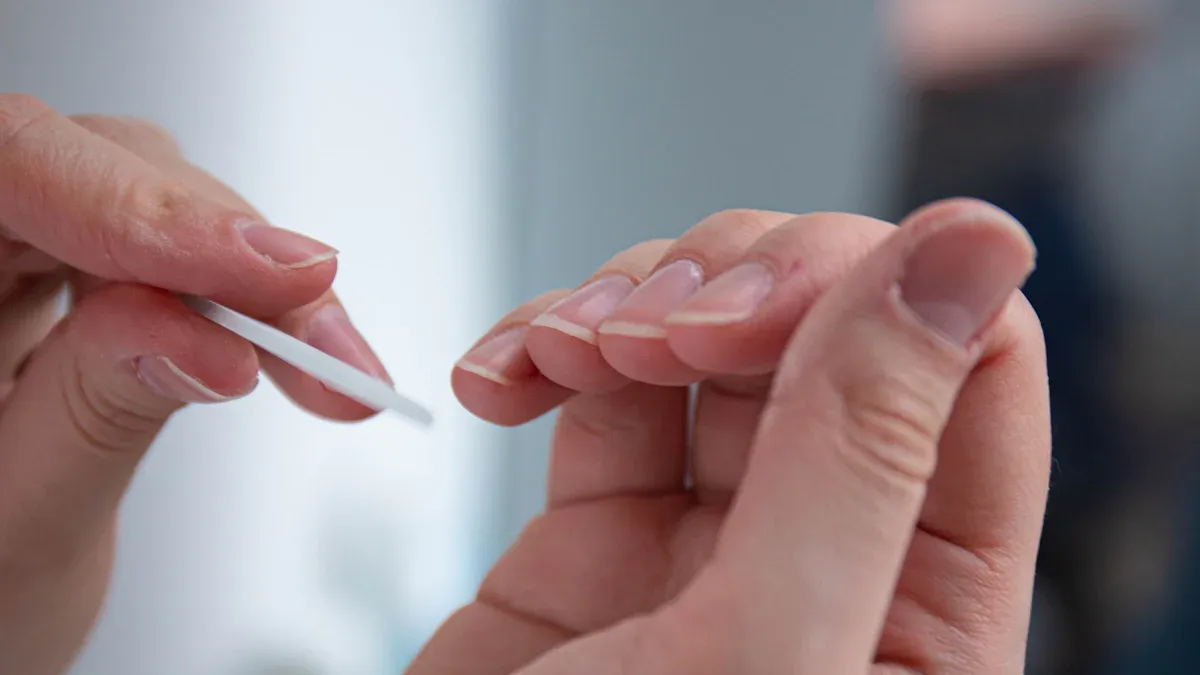
Getting your nails ready is the most important step if you want your gel manicure to last. If you skip or rush through prep, you might notice your gel nails start to peel—even after you dry gel nail polish perfectly. Let’s break down the most common mistakes and why they matter.
Nail Cleaning
You want your nails to be clean and free of oils before you start. If you leave behind dust, lotion, or natural oils, the gel polish won’t stick well. This can lead to peeling or chipping. Professional nail salons always make sure to:
- File and shape your nails
- Remove all debris and dust
- Wipe away any oils with alcohol or nail cleanser
- Make sure your nails are completely dry
When you follow these steps, you give your gel polish the best chance to stick and stay shiny.
Recommended next step
Use a Compatible UV/LED Curing Setup
CHROMÉCLAIR gel polish and gel nail stickers require a compatible UV/LED nail lamp. Build the curing step into the complete routine instead of treating it as optional.
- Apply the compatible gel product in a controlled layer.
- Cure it under a UV/LED nail lamp according to the product label.
- Check the surface before continuing with the next coat or top coat.
Shop UV/LED nail lampSee handheld UV lampCompare all routines
Cuticle Care
Cuticles protect your nails, but if you don’t care for them, they can cause problems. Leaving dead skin or pushing cuticles too hard can make gel polish lift at the edges. Here’s why cuticle care matters:
- Healthy cuticles help your nails stay strong and flexible
- Massaging cuticle oil can boost nail growth
- Hydrated cuticles lower the risk of peeling and lifting
Tip: Use a gentle cuticle pusher and never cut live skin. Healthy cuticles mean healthier nails!
Buffing and Shaping
Buffing gives your nails a slightly rough surface. Gel polish needs this texture to grip the nail. If your nails are too smooth, the gel can peel off in sheets. The most common mistakes include:
- Skipping buffing or using a very fine buffer
- Leaving dead skin on the nail plate
- Not shaping the nail edge, which can cause snags
When you take your time with buffing and shaping, you help your gel manicure last longer and look better.
Application Errors
Mistakes during application can make your gel manicure peel, even if you dry gel nail polish the right way. Let’s look at the most common errors and why they matter.
Thick Layers
You might think thicker coats give you a smoother finish, but they actually cause trouble. When you apply gel polish in thick layers, the light from your UV or LED lamp can’t reach all the way through. The bottom part stays soft and never cures properly.
Applying the gel polish in thick layers prevents the UV/LED lamp from penetrating and curing it completely. This leaves a soft, undercured layer of gel next to the nail plate that is unstable and prone to peeling.
Thin layers cure faster and stick better. If you want your manicure to last, always use thin coats.
Uneven Coats
Uneven coats can also lead to peeling. If some spots are thicker than others, those areas won’t cure right. You’ll notice lifting or flaking soon after.
- Thick layers of gel polish can hinder proper curing, leading to soft spots that are more susceptible to lifting and flaking.
- Insufficient curing time can leave layers unstable, resulting in quicker peeling.
- Proper application of thin, even layers is essential for effective curing and adherence, reducing the risk of peeling.
Try to keep each layer smooth and even. Shake your polish before use to help with this.
Old Gel Polish
Using old gel polish is another reason your nails might peel. Gel polish has a shelf life. If you use expired bottles, the formula changes and doesn’t cure well.
- Using expired UV gel polish can result in incomplete curing.
- Incomplete curing exposes users to uncured monomers that can cause skin allergies.
- Unopened gel polish has a shelf life of 18–24 months.
- Opened gel polish lasts 12–18 months.
- Old gel polish may not cure fully, leading to exposure to uncured ingredients.
- Uncured ingredients can trigger allergic reactions, which may be long-lasting or permanent.
Always check the date on your gel polish. Fresh polish gives you better results and helps your dry gel nail polish stay put.
Dry Gel Nail Polish: Best Methods
When you want your gel manicure to last, knowing how to dry gel nail polish the right way makes all the difference. Many people wonder why their gel nails peel even after drying. The answer often comes down to the tools and techniques you use. Let’s break down the best methods and explain why each step matters.
UV vs LED Lamps
You might ask, “Why do I need a lamp to dry gel nail polish?” Gel polish doesn’t dry like regular polish. It needs special light to cure, or harden, so it stays put. Air drying just won’t work for gel polish. That’s why you need either a UV or LED lamp.
Here’s a quick look at how UV and LED lamps compare:
| Feature | UV Lamps | LED Lamps |
|---|---|---|
| Curing Time | 2 to 3 minutes | 30 to 60 seconds |
| Type of Light | Broad spectrum | Narrow spectrum |
| Energy Efficiency | Uses more energy, bulbs last ~1,000 hours | More efficient, lasts up to 50,000 hours |
| Heat Output | Can produce more heat | Emits less heat |
| Gel Compatibility | Can cure all types of gel | Only cures LED-compatible gels |
You’ll notice LED lamps work faster and use less energy. If you want quick results, LED is the way to go. UV lamps cure all gel types, but they take longer and get hotter. If you use the wrong lamp, your gel polish may not cure fully, which leads to peeling.
Tip: Always check if your gel polish is LED-compatible before using an LED lamp. If not, stick with UV.
Curing Time and Hand Placement
Curing time matters a lot when you dry gel nail polish. If you rush or don’t cure each layer long enough, your manicure will peel or stay sticky. You need to follow the right timing for each coat.
| Coat Type | UV Lamp Time | LED Lamp Time |
|---|---|---|
| Base Coat | 2 minutes | 45 seconds |
| Color Coat | 1 minute | 30 seconds |
| Top Coat | 2 minutes | 1 minute |
Here’s what you should do:
- Cure the base coat for 2 minutes under a UV lamp or 45 seconds under an LED lamp.
- Cure each color layer for 1 minute under a UV lamp or 30 seconds under an LED lamp.
- Cure the top coat for 2 minutes under a UV lamp or 1 minute under an LED lamp.
Hand placement also affects how well your gel polish cures. If your fingers aren’t flat or you move your hand, some nails might not get enough light. That means those nails can peel faster.
Make sure your hand sits flat inside the lamp. Spread your fingers so every nail gets even light. If your lamp is small, cure your thumbs separately.
Lamp strength plays a role, too. Higher wattage lamps cure gel polish faster and more evenly. Professionals recommend using lamps with at least 36 watts. If your lamp is old, it might not work as well. Replace lamps every 2-3 years to keep your gel manicures strong.
Troubleshooting Drying Issues
Sometimes, even when you follow all the steps, your gel nails still peel or feel tacky. Why does this happen? Usually, it’s because of thick layers, not enough curing time, or a weak lamp.
Here are some easy fixes:
- Remove the sticky layer from the top coat with an acetone-based remover or cleanser.
- Apply gel polish in thin, even layers. Thick coats don’t cure well and peel faster.
- Cure under an LED lamp for 60 seconds or a UV lamp for 120 seconds. If you use thicker layers, add more time.
- Use a lamp with at least 36 watts for best results.
- Replace old lamps every few years to keep curing strong.
If you want to prevent peeling, start with clean nails, buff the surface, and seal the edges with polish. Use high-quality aftercare products like cuticle oil and strengthening top coats.
Some people try to dry gel nail polish without a lamp. Air drying, quick-dry sprays, or ice baths work for regular polish, but not for gel. Gel polish needs light to cure. If you skip the lamp, your manicure will stay soft and peel off quickly.
Remember, the right lamp, timing, and technique help you dry gel nail polish so it lasts longer and looks great.
Aftercare Habits
Taking care of your gel nails after you finish your manicure is just as important as the steps you follow to dry gel nail polish. If you skip good aftercare, you might see your gel nails start to peel or lift sooner than you expect. Let’s look at why certain habits can make a big difference.
Water and Chemicals
Water and harsh chemicals can weaken the bond between your gel polish and your nail. When you soak your hands in water for a long time, the moisture sneaks under your nails. This makes the gel polish lift or peel away from your nail plate. Cleaning products and soaps can also break down the shine and strength of your manicure.
Try to keep your nails dry and clean. Wear gloves when you wash dishes or use cleaning sprays. Dry your hands well after washing to stop water from getting trapped under your nails.
You can also help your nails by using cuticle oil every day. This keeps your nails and skin hydrated without making the gel soft or weak.
Picking or Peeling
You might feel tempted to pick at your gel polish when it starts to lift. This habit can cause a lot of damage. When you peel off gel polish, you pull away layers of your natural nail. This leaves your nails thin, rough, and full of white patches. Your nails can crack or break more easily.
- Picking at gel nails damages the top layer of your nail.
- You might see rough spots or white marks.
- Your nails can become weak and break.
- It’s best to visit a professional for safe removal.
If you want healthy nails, avoid picking or peeling. Book a removal appointment instead.
Skipping Top Coat
The top coat acts like a shield for your gel manicure. If you skip this step, your polish can chip or peel much faster. The top coat seals in the color and adds a strong, shiny layer that protects your nails from bumps and scratches.
- The top coat helps prevent chipping and lifting.
- Skipping it means your manicure won’t last as long.
- Always finish with a top coat for the best results.
Consistent aftercare, like using gloves, applying cuticle oil, and never skipping the top coat, helps your gel nails stay strong and beautiful. When you follow these habits, you’ll notice your gel nails peel less and last longer.
Gel nails sometimes peel after drying for a few key reasons:
- You might skip proper nail prep or leave moisture and oil behind.
- Over-filing or rough removal can weaken your nails.
- Cuticles that are not pushed back can block the polish from sticking.
You can prevent peeling if you follow these steps:
- Remove old polish and dust.
- File gently for a good surface.
- Let each layer dry under the lamp.
- Use a top coat for extra strength.
- Apply thin, even layers.
Practice helps you get better. If you keep trying, you’ll see your gel nails last longer and look great! 😊
FAQ
Why do my gel nails peel after just a few days?
You might see peeling if you skip nail prep or use thick polish layers. Oils or moisture on your nails can also cause problems. Make sure you clean, buff, and dry your nails before applying gel polish.
Why does my gel polish stay sticky after curing?
Gel polish stays sticky if you do not cure it long enough or use a weak lamp. Thick layers can also cause this. Try using thin coats and a strong lamp. Wipe the sticky layer with alcohol after curing.
Why do my gel nails lift at the edges?
Lifting happens when you leave cuticles or skin on the nail plate. Water or oil can sneak under the polish. Push back your cuticles and seal the edges with polish for better results.
Why can’t I air dry gel nail polish?
Gel polish needs special light to cure. Air drying does not work. Without a UV or LED lamp, your gel polish stays soft and peels off quickly.
 English
  Spanish
  German
  French
  Italian
  Dutch
Dutch