LED light bulbs work much faster owing to the wavelengths. The moment you run out of time or miss out on the curing stage, the gel polish chips away quite quickly. It is important that you give yourself adequate time for each coat application.
💡 Tip: Focus on the curing process. It is the key to a flawless manicure.
Summary Points
Cure gel polish properly to avoid chips and peeling. Follow recommended times: 30-60 seconds for LED and 120 seconds for UV lamps.
Apply thin polish coats for adequate curing. Applying thick coats may trap moisture hence leading to weak, soft polish.
Ensure that you check the wattage of your lamp. The higher the wattage, the faster curing takes place hence guaranteeing strong nails.
Always keep the lamp clean and serviced to avoid any cases of poorly cured nails.
Take time to do everything to ensure a quality outcome.
What Is Curing?
Curing Defined
You may be curious about the term “curing” when it comes to nails. Curing is defined as the drying and hardening process of gel polish that is in its liquid state. To cure it, you need to place your nails under either a UV or LED lamp, which triggers a chemical process known as polymerization.
Here’s how experts explain curing in nail technology:
Polymerization reactions start when nails are exposed to UV or LED light.
Key Components
Photoinitiators, acrylate monomers, and oligomers help make a tough film.
Polymerization Mechanism
Cationic and radical polymerization work, and how well it works depends on the gel and photoinitiators.
Composition Development
New formulas use film-forming polymers, pre-polymers, and other things for sticking and looks.
Health and Environmental Concerns
Scientists are trying to use natural ingredients instead of petroleum-based acrylates to make gel polish safer for people and the planet.
The process of curing gel polish involves several reactions:
There is a polymerization reaction in which the monomers and oligomers combine to form a solid substance.
The photoinitiators present in the polish absorb energy and initiate a reaction chain to create a cross-linked network.
The cross-linked network helps the polish resist degradation and flexing.
Why Timing Matters
A question that arises is “Why is timing important?” It is very simple. When each layer is not cured for a sufficient amount of time, the polish will not dry properly. This would make your nails sticky and not firm. It will chip and peel sooner than expected.
Timing each step is important because this allows the chemical process to happen fully. As a result, you will get a durable and shiny coat of polish that will last for a long time.
Gel Polish Curing Times
LED vs UV Lamp Times
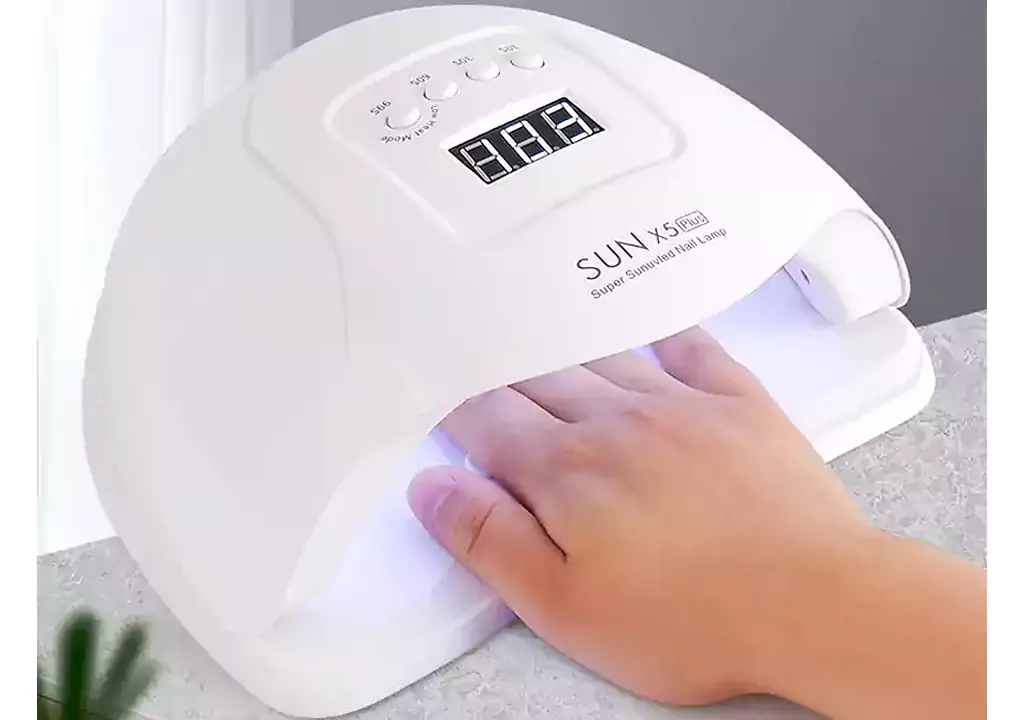
The first question that comes to mind when talking about two types of lamps used for curing gel polish is why do we have to use them. It turns out that these lamps have different sources of light that trigger the curing process. An LED lamp cures gel polish significantly faster than a UV lamp.
Here’s a quick look at how lamp wattage affects curing time:
The newer types of lamps have a higher number of LED beads and watts. This enables you to do your manicure faster since some lamps take less than 30 seconds to cure each layer.
Tip: Be sure to know your lamp’s watts. Also, follow the instructions provided by the specific brand of gel polish.
Layer-Specific Curing (Base, Color, Top)
Every gel polish layer must be cured differently. You cannot skip this step. If not done properly, your manicure will not stay.
Base Coat: This layer makes the color adhere. Cure it for 30-60 seconds when using an LED lamp or for 120 seconds when using a UV lamp.
Color Coat: Make sure your coats are thin. Cure for 30-60 seconds when using LED lamps or 120 seconds when using a UV lamp.
Top Coat: This is the final coating layer on your manicure. It cures for between 30 and 60 seconds when using LED lamps, and 120 seconds when using UV lamps.
With more wattage lamps, it will be cured quickly. Be careful not to have too much heat because it might destroy the nail polish.
Factors Affecting Cure Times
Many things can change how well your gel polish cures. Here’s what you need to watch out for:
Wattage of Lamp: More watts lead to fast curing. Insufficient wattage causes the polish to be improperly cured, leaving your nails soft while excessive wattage over-cures your nails.
Quality of Lamp: If you have outdated or defective lamps, your polish will fail to cure well leading to chipping, lifting as well as allergic reactions.
Thickness of Layers: Applying thick coats will prevent proper curing since the layers may not completely harden from within. Apply thin layers.
Brand of Polish: Different brands cure at different rates. Consult instructions on each container before applying.
Environmental Conditions: Temperature and humidity affect the rate at which your polish cures. Increased humidity or cool temperatures hinder curing while warm and dry conditions speed up the process.
Below are some pointers that you might find helpful:
Apply thin layers for all layers.
Ensure that your lamp works properly and is sufficiently powered.
Adhere to the manufacturer’s guidelines.
Your workspace should remain dry and have a comfortable temperature.
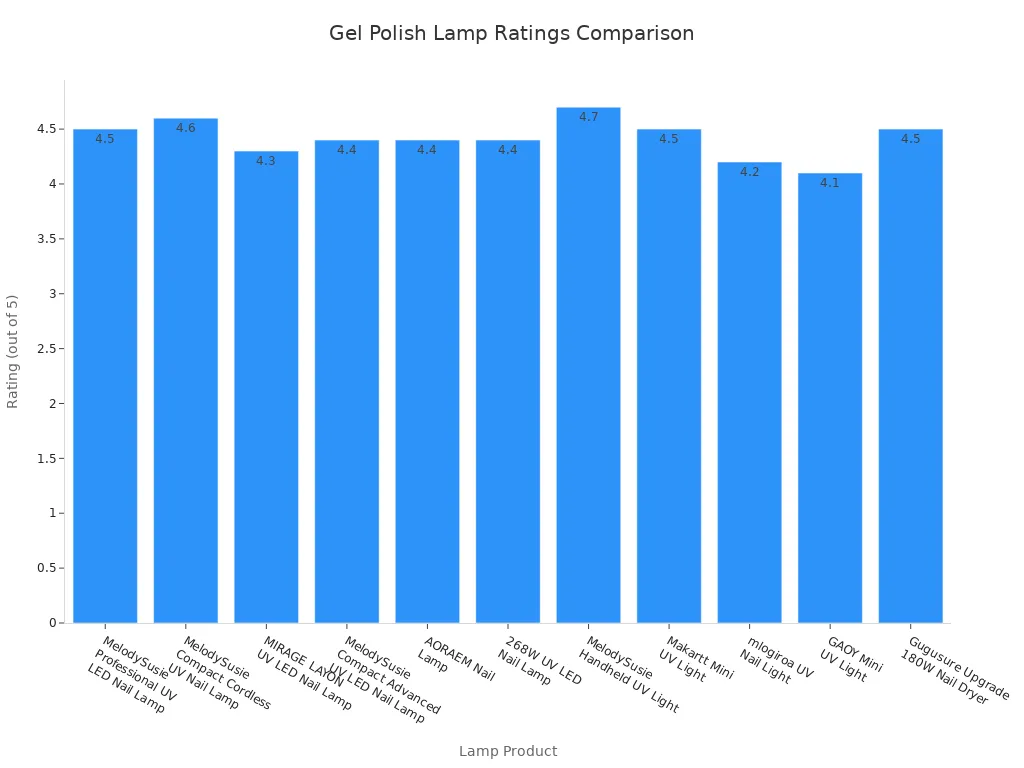
If you want to see which lamps work best, check out this chart:
Note: Just remember that regular cleaning of your lamp and maintenance of the bulbs or LED light are essential. You will always maintain the right curing times and produce perfect-looking nails each time.
By understanding the significance of these ingredients, you will learn how to avoid these typical mistakes and have your manicures last long.
Effects of Improper Curing
Issues Right Away (Stickiness, Smudging)
In cases where the nails have been cured improperly, you will quickly realize that certain issues have arisen. These include stickiness and softness of your gel polish. In extreme cases, your nails will be smudged when you come into contact with things shortly after applying the polish.
Some of the causes of these problems include:
The thick coats can prevent the light from reaching your lamp. The polish will remain sticky and might get heated excessively.
Stale or contaminated gels can make the gel sticky or separated. Consequently, the polish fails to cure properly.
It can be challenging to differentiate between the sticky layer that should come out during the process and the uncured polish. You need to leave the polish on your nails until the nails become hard after removing your hands from the lamp.
You want your nails to look shiny and smooth. If you rush, you get tacky nails that pick up dust and lint. That is not the look you want!
Long-Term Problems (Chipping, Peeling)
Failure to properly cure your gel polish will make you experience more serious consequences within a couple of days. It may begin chipping and peeling, making the nail dull rather than glossy.
The following is the explanation why it happens:
Firstly, moisture is retained between your nail and the gel polish layer making the polish peel and lift up.
Secondly, while the surface may seem completely cured, its inner layer remains soft, thus leading to fragility and chipping.
Thirdly, should a chip occur, there will be peeling, requiring an immediate action to prevent further damage.
Fourthly, soft layers do not provide protection and can easily chip.
Lastly, uncured chemicals can trigger itching, inflammation, and even allergic reaction.
“This trend is occurring more frequently because an increasing number of individuals are using DIY kits, getting the allergic reaction, and then visiting the beauty salon where the reaction becomes exacerbated.”
“UVA lamps used for curing the nail polish may not be appropriate for every variety of gel. In case the lamp is lower than 36 watts or has incorrect wavelength, then acrylate monomers will remain uncured and get absorbed into the skin causing irritations and allergic reactions.”
You would like your manicure to endure. It is essential to cure it properly so that your nails stay healthy and beautiful.
Proper Curing Steps
Gel Polish Cure Steps
In order for your manicure to retain its structure, you have to be keen enough to follow all the steps. This is necessary so that your nail polish remains in good condition. Here are the steps to ensure you achieve salon-level nails at home:
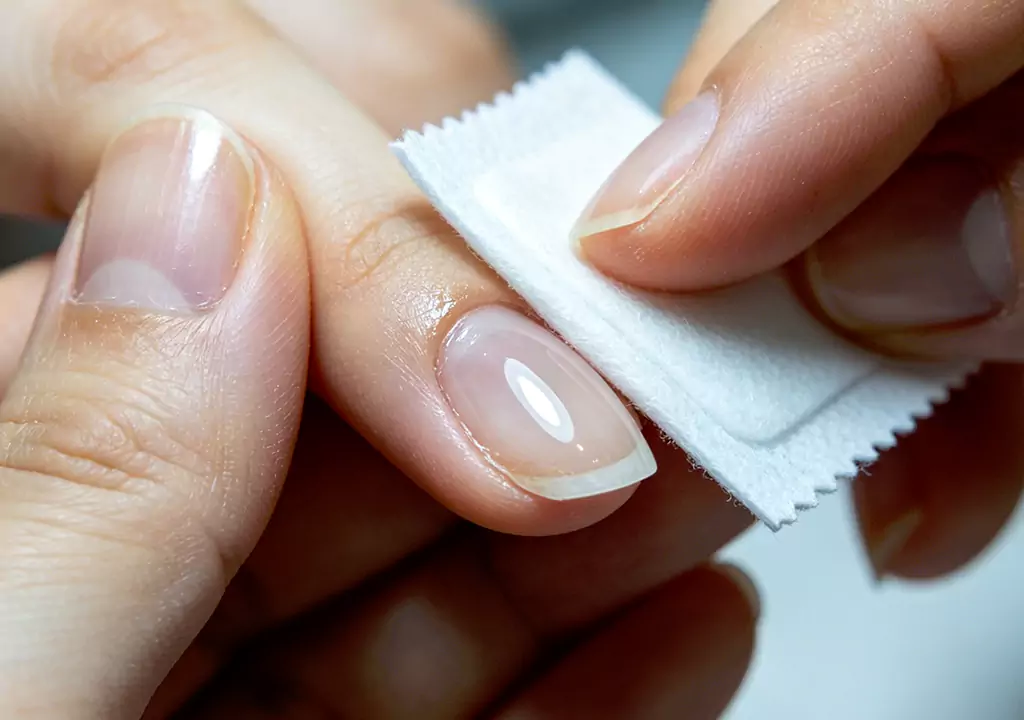
First of all, you need clean manicured nails. All the polish residues need to be removed. The oils and dirt must also be washed off, as they can hinder proper adherence of the polish.
Prepare your nails. Your nails can be shaped with the use of a nail file. Buff your nails slightly to prepare them for the gel polish.
Pull your cuticles back. Gently pull them back using a cuticle stick. You will get enough room for the application of polish.
Apply a thin base coat. Apply a thin layer and cure it under an LED lamp for 30 seconds or a UV lamp for a minute.
Apply thin layers of the color. Apply one thin layer of color. Allow curing time for 30 to 60 seconds using LED or 2 minutes under UV light. You may apply more layers of color for brighter nails, but each layer should be thin.
Use a top coat on your nails. Apply a thin top coat on your nails. Let it cure for 60 seconds with LED or 2 to 3 minutes under UV light.
Clean the sticky layer. Clean up the sticky layer by applying the cleanser.
Apply cuticle oil. Use cuticle oil on your cuticles.
💡 Tip: Thin layers cure better and last longer. Thick coats can stay soft underneath and peel off.
Common Mistakes to Avoid
You might wonder why your gel polish chips or peels even when you follow the steps. The answer often lies in small mistakes. Here are some common errors and how you can avoid them:
Incorrect choice of the lamp. There is no universal lamp. It means that it is required to ensure that the lamp is suitable for your polish.
Thick layers. It is better to use thin layers rather than thick coats since the latter do not cure properly. As a result, they tend to chip and peel off.
Insufficient curing time. Undercuring leaves the polish layer soft, so it tends to lift quickly. In this situation, the recommended solution is to extend the curing time.
Poor hand position. You have to make sure that your hand is placed correctly in the lamp, otherwise, some of the nails will not receive adequate exposure. Therefore, you have to place your hand in the right manner.
Old or low-power lamp. Such devices become less powerful over time, so their efficiency decreases.. If your lamp is old, it may not cure the polish well. Replace bulbs or upgrade your lamp if needed.
Mistake
Why It Matters
How to Avoid
Wrong lamp
Causes under-curing and allergies
Use a lamp made for your gel polish
Thick coats
Leads to bubbling, chipping, and peeling
Apply thin, even layers
Undercuring
Results in lifting and weak polish
Cure for the full recommended time
Bad hand position
Some nails stay soft and uncured
Keep your hand flat in the lamp
Old lamp
Weak light means poor curing
Maintain or replace your lamp
🚫 Don’t rush! Take your time with each step. Your nails will thank you.
How to Check for Full Cure
To ensure your gel polish is cured completely before proceeding further, you will have to carry out the following checks:
Touch test: After the curing process, tap the polish surface. This will help you determine whether it is hard or soft.
Shine test: Once cured properly, the polish will look shiny and smooth. You can identify dull sections and conclude that more curing time is required.
Flex test: Gently push on the nail’s edge to test the flexibility of the polish. This will help you understand if it will crack or peel off easily.
Sticky layer: It is common for gels to remain tacky after curing. Use a cleanser to wipe off any sticky residue from the polish surface.
🕵️♂️ Pro tip: If you’re unsure, cure for an extra 30 seconds. Over-curing is safer than under-curing.
Always ensure that compatible lamps are used at all times and that they are in excellent condition. In addition, thin layers are applied and each hand is cured separately to ensure that each nail is properly exposed to the UV light. The following is the process.
If carried out correctly without making any errors, your manicure will definitely stay pretty for quite some time.
To make sure that your manicure stays beautiful, it is essential to ensure that it will last. With the correct curing periods and techniques, you will definitely end up with strong and glossy nails that stay unchipped for weeks. This is due to the fact that:
Your nails will not chip easily nor will they lose their shine.
Correct curing enables your nails to last up to three weeks.
Thinness and uniformity allows proper penetration of the light throughout your nails.
Good lamps and preparation prevent sticky or weak nail polish.
Stick to these tips and avoid common mistakes. You’ll enjoy salon-quality results at home every time.
FAQ
Why does gel polish stay sticky even after being cured?
The problem of sticky gel polish is caused by insufficient curing. Also, sometimes the lamp may not be powerful enough. In case there are sticking issues, you should cure the polish for 30 more seconds.
Why do my gel nails break?
Frequent chipping is usually due to too fast curing and using very thick gel polish coatings. To avoid such a problem, you need to apply thin layers of polish and use the appropriate lamp power.
Can I use regular nail polish with the gel lamp?
You shouldn’t mix regular gel polish with a gel lamp since it does not contain any curing agents required for reacting to UV or LED light.
Why should I use thin coats on my gel polish?
When using thin coats, the light penetrates through every portion of the nails. Thick coats are still soft at the base and flake off quickly. Applying thin, smooth layers will give you better results.
Why does my gel polish have wrinkles?
The reason you see wrinkles is because you used either thick layers or over-cured your polish. Your lamp may also produce too much power. Apply thin layers and ensure that the wattage is right.

 English
  Spanish
  German
  French
  Italian
  Dutch
Dutch